A Faith Forged in Relationship

Waiting for the Word, Flickr

God’s way is the best way—do you believe that? I am certain that his commands to humans are grounded in a consuming love for them. What he orders us to do, whether spoken in the written Word or in the quiet of our hearts, is purposed for our benefit and joy, never burdensome or appeasing his need. God has no needs; instead, he only seeks to give us his best.

The scope of God’s directives transcends mere rule; they reveal him (Ps. 19:7-9). They explain so much about his intent toward us, which is only good and loving. Here is where some will quickly add, “Yep. This is not a religion, but a relationship”—and I’ll only partly agree, because Christianity is religion…is a religion, but one emphasized in relationship. The two are conterminous, for the one leads to the other.

Setting Our Spiritual Priorities

Relationship is the goal, however, life-changing, radical relationship. It has always been the basis of Judeo-Christian faith. God doesn’t ask us to trust him blindly. In Scripture and in our lives, he has always revealed himself…revealed his character and made sure that we never have to trust in One we don’t know or understand.

Wholesome, dynamic relationship is the clue we gather from the succinct reference to Enoch in Hebrews 11:5, relationship so wonderful that God whisked Enoch out of this life into another—and then come these words: “And without faith it is impossible to please God, because anyone who comes to him must believe that he exists and that he rewards those who earnestly seek him.”

In my post entitled “Getting Faith Right”, I write about this passage and myself: “I knew God was there, but I didn’t understand that before all the great possibilities of his power and my obedience was our relationship and that it is the touchstone to everything.”

When our relationship with God is strong, we’ll have no problems with his commands. And we can be used powerfully like Philip, Ananias, and others who were simply told “Go!”; and despite being given no further instructions, their confidence rested not in results or their own well-being, but rather in their Commander.

It All Points to Him

God tells us to do nothing without orienting it to himself, his character and purpose. He never just says “Believe”; instead, he says, “Believe me.” He doesn’t say “Love,” but “Love me.”

Don’t believe the many slogans—“Love is all that matters” and “Just believe”, or at least judge them by the scriptures. Jesus exemplifies a life with every sensibility aligned with his Father and his purpose. No love exists in a vacuum without the potential for abuse; there is no worth in a faith in ourselves.

Furthermore, ours is a caring Father peering into our faces giving his instructions, which is especially important when the orders appear dreadful or are tough to our will.

God is all. He guarantees what is done for him and achieved by his strength. And if we do all for his glory, we’ll accomplish his will and discover incredible joy doing so.

Read more: The Goal of Religious Practice

Probing the Parable of the Ten Virgins

CC BY-NC, Waiting For The Word, Flickr

I am a booklover. I own hundreds of books and have read just as many. I don’t have a favorite one because their subjects are so diverse and interesting. But the two that stand above the rest for me are the Bible and the dictionary. (Yes, I’m one of those people!) It only follows that I am infatuated with words. I love how words work and grasp that they are important to knowledge.

Like letters that symbolize sound units, words too are symbols for ideas, concepts, and things of concrete reality. They offer information and carry shades of meaning. They possess an inherent ability to raise the level of one’s intelligence. But in order to use words we must understand them, or they must be defined. To define a thing is to make it distinct or clear.

In the New Testament, we discover a spiritual example of this. John states with his very first sentence, “In the beginning was the Word.” John intended to explain the profound reasoning of God spoken into the gloominess of human depravity in the person of Jesus Christ. Hebrews 1:3 further describes Christ as the radiance of the glory of God and the icon, or representation, of the Godhead. This explains what Christ often told his hearers, that when they saw him they saw also the Father. Jesus defines what God is all about.

But words can be problematic, especially when we are not as sure of their definition as we could be. Often, in attempts to explain them, we use alternate meanings that fall short of a true definition. I must confess that faith is a concept for which the definition I am not always sure of as I’d like to be. It is a nebulous essence as tangible as grabbing a chunk of air. Defined enough for spiritual life and relationship, it retains enough of the mystery of God to hold us back in wonder of him and his doings.

Under the microscope of theology, one will observe that faith is a gift: none are born with it. And being a gift, faith is a gift of sight, for it is impossible that a dead soul should raise itself to life or an unregenerate person should think godly thoughts. But God shines his light upon the soul that it might live and, in living, ponder thoughts of him.

Fundamentally faith is belief—in God and the words of God (Rom. 10:17)—and belief is our light by which we spiritually see in a dark world.

The Apostle Paul comments on this in Ephesian 5:14 when he says, “Awake thou that sleepest, and arise from the dead, and Christ shall give thee light” (KJV). He goes on to add in verses 15 and 16, “Be very careful, then, how you live—not as unwise but wise, making the most of every opportunity, because the days are evil.”

In the parable of the ten virgins in Matthew 25, the marriage story is told of the bridegroom who was to return and the virgins who had to go out to meet him. Five were wise because they took extra oil in jars for their lamps, and five were foolish because they took no thought to do so. Moreover, what is important to see is that a qualitative decision had been made, particularly, by the wise virgins prior to all the other circumstances (and what they might symbolize) that occur in the text.

Here is a good resting place to discuss the wisdom faith brings. With faith comes the ability to see God and to walk according to his will. We develop tuning our hearts to his words and we learn to enjoy him. Most importantly, we mature to understand God’s motives, to know that he only loves us and wishes us no harm. Thereby, we gain discretion to know what he is doing without seeing the whole picture.

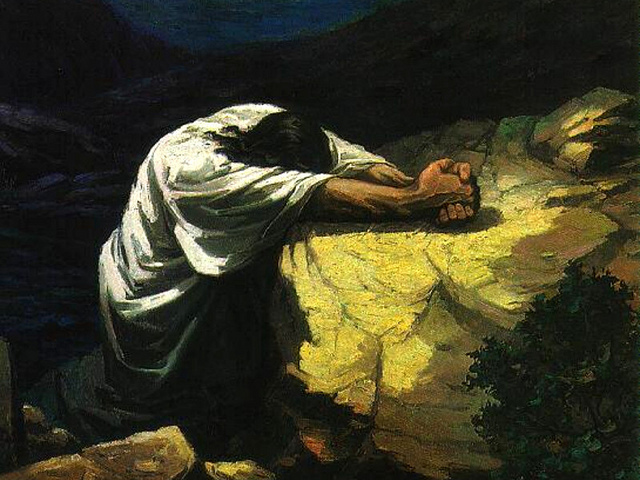
All of this is developed with persistence in the prayer closet. The prayer place is not only a routine the spiritual undertake, but also the believer’s intimate place with God. Prayer should encompass our endeavors to develop spiritual habits and discipline—and with it should be included a catalog of classic disciplines that leave us nothing less than naked before God. In the end the point is simple: personal holiness.

Hence we discover the problem with the unwise virgins and those without spiritual sight. They have not understood the responsibility that comes with a life of faith. To relate it to our first theme, they have critical problems defining faith and have never mastered its language. For many, their view of God has become distorted by indifference, suffering and hard times, offenses, vain philosophies, and other complexities until their spiritual enlightenment has been snuffed back into darkness.

The division between the wise and the unwise becomes very clear where it concerns the practical outflow of faith. How one carries out his or her belief is important. Many claim to be Christians but not all are devout. Everyone is not in the press to live holy. Not all strive against the tide of sin. Not all have in the river turned to swim upstream. In the end, one will abuse and ultimately lose what he or she doesn’t understand. This is why Jesus chastises the religious leaders in Matthew 16 that they were so able to predict the weather but didn’t have the sight to discern the signs of the times.

We cannot criticize the wise virgins as selfish or arrogant because they didn’t share their oil. Their attitude explains to us that forerunners in our spiritual walk can only take us so far in defining faith; to them we may be entirely grateful. But to mature in God will take a conscious effort to follow the way God leads for growth, personally.

The oil in the virgins’ lamps represented their personal conviction and an individual righteousness. It was personal holiness that could not be shared. It was their learnedness and literacy in the things of God—costly, labored for, unsharable, and, in the end, not worth the possibility of missing Christ.