Why does God never leave me?—that’s what I wonder sometimes. Yes, I know the answers, but sometimes it’s helpful to let yourself go there. It keeps you humble and concentrating on grace. And why is it that the more the heat has been raised in my life—whether by God’s fire of testing or my playing with sinful fire—or the more distant I once grew toward him, the more consuming were my thoughts of him?
Why did I never turn away when God felt too far to reach?
I may never understand any of it, except to know that when I would have run away, he simply wouldn’t let me go, or I, like Jacob in flight, ran smack into him any way I went.
When I lived in Indianapolis and trekked through a real spiritual wilderness, one day I was driving from my workplace and listening to a Catholic priest in a radio interview. I don’t recall the specific question he was asked, but it was something like how to explain people who question God or grow sullen in difficult times. I perked up. His response still resonates with me.
He stressed that people who wrestle with their faith often do so not to distance themselves from God, but to reach for him. I understood exactly what he meant. Hopefully that includes being angry at God, too. I once viewed anger at God as a terrible thing (who would dare!) until I got angry with him.
What I’ve learned is that anger and stressed faith will happen and is sometimes necessary in our process. The heart that truly loves God, however, does not shake its fist at him but strains to comprehend his will, to see in the dark. What may look like a fight with God to others (and sometimes to us) is but a fit of frustration to know him better. For me, I realized how ingrained faith was in my soul. Quitting God was no option.
“Whom have I in heaven but you? And there is none upon earth I desire besides you. My heart and flesh fail, but God is the strength of my heart and my portion forever. ” Psalms 73:25-26
After going through the ho-hums long enough, we gain insight. We learn to discern God’s designs for something foremost within us rather than any external conditions we need solved, although God works in our affairs, too. We also learn to measure the degree of our frustration. We may have our “moments” and get low on faith and stray and crave sin and smolder, but we do so with our faith mostly intact. We can only imagine what it would be like tackling life without God or the Holy Spirit’s restraint.
I’ve learned to latch onto this faith ride. I once had the notion that I could simply abandon myself to faith, as if setting a dial to make sure I remain in a proper state of heart. But now I realize that I cannot store faith and that God designs our process to deal with our specific inner needs. It is not possible to be passive in our own making. The heat that God brings into our lives is there to make us move! So faith is not a dial I can set but a wheel I must steer on my journey.
Not to be contradictory, I’ve learned to retain just enough indifference for it all not to matter so much. Don’t let that surprise you and if it does, stay on the journey—it’ll make sense soon enough. But take it all in stride. This is letting the top down to enjoy the sun and breeze and taking in the view, allowing God to care about the terrain we must travel.
“Master, carest thou not that we perish?” This is Mark 4:38 in the King James Version. I love its poetic tone. If it were you or me today, about to be marooned at the bottom of the sea, we’d say, “JESU-US! Get up! We’re about to die here!” Jesus must have been “in the zone” when the disciples shook him awake, fear in their eyes.
Moreover, their inquiry, so rhetorical and profound, is quite revealing of our human limitation. Plight and hardship comes to everyone in some way. When it enters our lives and we’ve reached the limit to what we can handle, we often frantically search for answers using questions that would be reproachful and unthinkable in an ordinarily peaceful state of mind.
“What did I do to deserve this? Am I so evil that…? Do you really love me? If you’re God, then why don’t you just…?” We become sarcastic and harsh, not unlike the Israelites—“You mean to tell me we left our life in Egypt to get out here and waste away?” It’s not just the sinners who talk to God this way; the saints do it, too, when the heat gets too hot, if only in their hearts.
I am not being critical; if it helps, I’ve been one to gripe this way. And I’m certainly not defending God who regularly demonstrates his capability of handling our weakness. I can appreciate the fact of my limited capacity; it’s part of our nature. But there will be times in life where a higher level remedy is needed, and, thankfully, it is available to us. Further, it’s useful to pause and reflect with some sense of self-estimation. I am frail; God is strong. In his wisdom, he permits the storm from time-to-time to help me discover my strength in his or to prove it.
Pain is never easy but always purposeful. When God allows a storm in our lives, he uses it within his plan. We should always be better after storms than before them, but the outcome isn’t the focus here. This is not unlike storms themselves: they (and God) don’t give us time to focus on conclusions lest we miss the lessons God is attempting to teach us. Storms must be endured, for it is in our persistence, not our escape attempts, that God reveals things about us and him. We must trust him that we’ll land safely ashore when it ends.
God uses pain in our lives to make us move and achieve mature responses he’s waiting on. Hardship always forces us in some way: to uproot, to plant, to build, to tear down, to eliminate, to renovate…something. The “fire” puts us in action.
When I was a boy, one summer day my brother and I (with adults) had to cross a newly paved thoroughfare in our town on a very hot, cloudless day. We decided to do it barefooted! (The pavement was so smooth and beautiful, okay!) We assumed that the road wasn’t all that hot, plus we’d be on the other side in seconds. Unfortunately, we got halted in the middle of the road by oncoming traffic for far longer than we expected, and our shoes were inaccessible to us. Drivers got a free hootenanny that day! Our poor feet nearly burned to nubs!
Likewise, the heat in our lives is a grace that jolts us into action to achieve results God desires for us and that we would certainly desire for ourselves.
The storms we go through are tough, but God, addressing our questioning and limited understanding, explains that it’s designed to be that way. Yet we have his promise that the storms will never destroy us. When we have nothing more to latch onto for help, we will learn to cry out for God, which should be instructive. God desires to show us how reaching for him and his spiritual provisions should be our first response in whatever we face, whether times are good or bad.
I imagine that in their moment of fright the disciples were certain that everyone, including Jesus, was going down. Isn’t that like our human frailty, to see God as subject to the terms and conditions that life places on us. And that’s when the Lord makes a demand: “Where’s your faith?” Not that we possess no faith…not to berate or belittle us, but to call out of us, with the same authority he rebuked the wind and sea, the faith lying small within.
Does this photo take your breath away? CC BY-NC, plousia, Flickr
Today is special. In fact, this entry is special because I deviate from protocol. I try to compose in a way that removes time stamps—recently I…yesterday was…last year…or simply today. But this day, August 3rd, is especially meaningful to me. It is the day in my history when I became fully assured of my salvation. In a sense, it is my spiritual birthday, although I frown on dating salvation.
Please indulge me for a moment of reflection. My father died before I turned five years-old. Faith was very important to my mother, and she kept all five of her children—ages 17 to 3—in church. I joke that I was born on the front pew! But God gripped my heart from the dawning of cognizance in me. I still remember my brother and me deciding to go forward to receive Christ.
From that moment, I identified with all-things-Jesus. I admired my pastor and knew that I wanted to do what he did. I preached fervently around the house, on the front and back porches…the old car in the backyard, and in the schoolyard at recess. I drew crowds in the neighborhood and a tearful drunk to the front door of my home. I earned a moniker as the “Kid Preacher” that still remains.
I walked conscientious of my faith as I grew up. But as I approached my teen years, I became troubled, not knowing if I was truly saved. I couldn’t stand it any longer one Sunday. I sat on the back pew after the morning service deliberating. I asked a church buddy sitting next to me, “Do you wanna go get saved?” He said no, but my heart was fixed.
I met my pastor descending the podium, just after 3 p.m. (yes, church was long back then!), and we asked God to come in. My pastor was elated and returned to the mic and announced what had just occurred. I couldn’t contain my emotions. I recall Deacon Brown, Mother Lewis, Sister Fitzgerald, and Sister Patterson, all now in Heaven, gathered around me sharing the love of God.
See why this day means so much to me?
Children Matter To God
I reflect on this moment to express a concern, also. Now in my heart, I know that I entered the kingdom when I was about five, but because my church placed little emphasis on childhood salvation, I had no assurance and encountered doubt at 12, unnecessarily so. Today I say that August 3rd was the day I “became assured” or became a “student of the Word” because my spiritual discipline did become thereafter what it continues to be today. But I don’t want any kid to have to experience the uncertainty that I did.
Churches and leaders must see that children mean just as much to God as the drug addict in the alley or the spiritualist across seas. Their salvation is incredibly important because they are not only sinners by default, but they also have not yet had to deal with temptation and vice. We work from an advantage when as loving and godly parents and leaders we teach kids at their level about a benevolent heavenly Father, his expectations of them, and how to be devoted to him.
This is not brainwashing, as some argue. We believe it is spiritually necessary, but it is also what any parent of any religion or value-system traditionally (and naturally) does, which is disclose or instill the principles by which they themselves live. It doesn’t negate the fact that a time will come, as we all know, sooner or later, when that person will decide for themselves whether they will abide by their foundational knowledge or go a different way.
We teach Christian principals because they come from God and because we know that they are tremendously valuable in their essence. And we had better know that if we don’t turn people’s attention to God early, especially as kids, the forecast gets murkier. We will pray easier if we pray earlier.
This certainly doesn’t negate the power of God to save at any period of life. But if the Holy Spirit does the hard work by bringing souls to life—any soul, we must assist him by being the life support team conscientious about its mission. For some of us, however, this simply boils down to what we believe about the necessity and efficacy of childhood salvation.
Churches need to see their outreach programs beginning at knee-high level…well ankle-biter. Most churches won’t have the budget for major children’s facilities, the glitziest productions, and paid staff, but I didn’t have that either. I only had a conviction in my heart, and this is the basic that’s important: Gospel.
We must affirm childhood salvation. This is a ministry of stooping that we’ll be happy about in the long-run. Yes, Jesus loves the little children.
In despair I thought, I am the exception to the grace of God. It slipped from my heart so gently and disgusted me on reflection, but I cannot deny it. Discouragement was fighting hard to get its paltry grip around me; thankfully, I prevailed over it.
I love the Lord and try hard to guard my thoughts and the words I speak about myself and the course of my life. I don’t want to offend him, the one who acts providentially for me. I understand that he deeply loves me, and my narrow assumptions may be discourteous to him. He cares for me better than I care for myself.
Then, I discovered David’s own testimony: “In my alarm I said, ‘I am cut off from your sight!’” (Ps. 31:22) This is the man after God’s own heart expressing the same unglamorous thought I had. In verse seven, however, he makes a keen observation: “You have known my soul in adversities” (NKJV). This thought consoles me.
We Hurt and That’s Okay
It can be quite contemptible to bear your soul, even to God. I would like to insist that I love the Lord perfectly and never have doubts; that I never struggle with his words or instructions; that I take it in stride when he stands in the shadows and isn’t apparently working for me.
But I am not that guy.
Nevertheless, I have learned that he is not offended by my limitations and brokenness. His opinion doesn’t change about me because I don’t have it together. Moreover, in his acceptance, I gain the freedom to not worry about how others perceive me. I don’t have to appear strong so everyone can think well of me and assume my spiritual fitness.
I hurt at times. I doubt. I freak out searching for God. I get angry with him and wonder why the process cannot be easier. I grow forlorn that things won’t turn out well. All of this is what David means when he says, “You have known my soul…”
Trusting in the Divine Aid
Hear me carefully: God’s love and acceptance is not an excuse for sulking and forgetting our spiritual heritage in Christ. Instead, it frees us to be what we are—human—and fully so. Thereby our burdens and pains are employed to develop character in us by the skillful hand of God.
Also, we must not forget that Christ assumed our humanity and, with it, secured our freedom, and, now retaining it, he who represented God to us now represents us to God.
David continues: “You have not given me into the hands of the enemy but have set my feet in a spacious place” (v. 8). Those who trust in the Lord can have confidence that the fears and doubts will not hem them in.
I can be sure that I have never been the exception to God’s grace. He will always give me room to fight and conquer every mental foe and dark power that assails me. God’s power is perfected in my weakness.
I am a booklover. I own hundreds of books and have read just as many. I don’t have a favorite one because their subjects are so diverse and interesting. But the two that stand above the rest for me are the Bible and the dictionary. (Yes, I’m one of those people!) It only follows that I am infatuated with words. I love how words work and grasp that they are important to knowledge.
Like letters that symbolize sound units, words too are symbols for ideas, concepts, and things of concrete reality. They offer information and carry shades of meaning. They possess an inherent ability to raise the level of one’s intelligence. But in order to use words we must understand them, or they must be defined. To define a thing is to make it distinct or clear.
In the New Testament, we discover a spiritual example of this. John states with his very first sentence, “In the beginning was the Word.” John intended to explain the profound reasoning of God spoken into the gloominess of human depravity in the person of Jesus Christ. Hebrews 1:3 further describes Christ as the radiance of the glory of God and the icon, or representation, of the Godhead. This explains what Christ often told his hearers, that when they saw him they saw also the Father. Jesus defines what God is all about.
But words can be problematic, especially when we are not as sure of their definition as we could be. Often, in attempts to explain them, we use alternate meanings that fall short of a true definition. I must confess that faith is a concept for which the definition I am not always sure of as I’d like to be. It is a nebulous essence as tangible as grabbing a chunk of air. Defined enough for spiritual life and relationship, it retains enough of the mystery of God to hold us back in wonder of him and his doings.
Under the microscope of theology, one will observe that faith is a gift: none are born with it. And being a gift, faith is a gift of sight, for it is impossible that a dead soul should raise itself to life or an unregenerate person should think godly thoughts. But God shines his light upon the soul that it might live and, in living, ponder thoughts of him.
Fundamentally faith is belief—in God and the words of God (Rom. 10:17)—and belief is our light by which we spiritually see in a dark world.
The Apostle Paul comments on this in Ephesian 5:14 when he says, “Awake thou that sleepest, and arise from the dead, and Christ shall give thee light” (KJV). He goes on to add in verses 15 and 16, “Be very careful, then, how you live—not as unwise but wise, making the most of every opportunity, because the days are evil.”
In the parable of the ten virgins in Matthew 25, the marriage story is told of the bridegroom who was to return and the virgins who had to go out to meet him. Five were wise because they took extra oil in jars for their lamps, and five were foolish because they took no thought to do so. Moreover, what is important to see is that a qualitative decision had been made, particularly, by the wise virgins prior to all the other circumstances (and what they might symbolize) that occur in the text.
Here is a good resting place to discuss the wisdom faith brings. With faith comes the ability to see God and to walk according to his will. We develop tuning our hearts to his words and we learn to enjoy him. Most importantly, we mature to understand God’s motives, to know that he only loves us and wishes us no harm. Thereby, we gain discretion to know what he is doing without seeing the whole picture.
All of this is developed with persistence in the prayer closet. The prayer place is not only a routine the spiritual undertake, but also the believer’s intimate place with God. Prayer should encompass our endeavors to develop spiritual habits and discipline—and with it should be included a catalog of classic disciplines that leave us nothing less than naked before God. In the end the point is simple: personal holiness.
Hence we discover the problem with the unwise virgins and those without spiritual sight. They have not understood the responsibility that comes with a life of faith. To relate it to our first theme, they have critical problems defining faith and have never mastered its language. For many, their view of God has become distorted by indifference, suffering and hard times, offenses, vain philosophies, and other complexities until their spiritual enlightenment has been snuffed back into darkness.
The division between the wise and the unwise becomes very clear where it concerns the practical outflow of faith. How one carries out his or her belief is important. Many claim to be Christians but not all are devout. Everyone is not in the press to live holy. Not all strive against the tide of sin. Not all have in the river turned to swim upstream. In the end, one will abuse and ultimately lose what he or she doesn’t understand. This is why Jesus chastises the religious leaders in Matthew 16 that they were so able to predict the weather but didn’t have the sight to discern the signs of the times.
We cannot criticize the wise virgins as selfish or arrogant because they didn’t share their oil. Their attitude explains to us that forerunners in our spiritual walk can only take us so far in defining faith; to them we may be entirely grateful. But to mature in God will take a conscious effort to follow the way God leads for growth, personally.
The oil in the virgins’ lamps represented their personal conviction and an individual righteousness. It was personal holiness that could not be shared. It was their learnedness and literacy in the things of God—costly, labored for, unsharable, and, in the end, not worth the possibility of missing Christ.
The more I know God the more remarkable to me is his worth. It demands my response. But “What shall I render to the Lord for all his benefits toward me?” Who can give him what he already owns? Glory? He dwells in light inapproachable. Honor? We call him God. Dominion? The universe is his. […]
I still needed to make my birthday wish. It was five days late, but what could it hurt? So I grabbed the white star-shaped, helium-filled balloon and went outside. There I whispered a prayer to the God of all hopes for three things I desired and really needed to see happen for me in the coming year. Having wished upon a star, I released it into the oncoming night and let it fly to God.
It is the irony of that moment that lingers and strangely satisfies me like a finely textured dish: a wish and a prayer, the star and God, hope and faith, chance and certainty, eagerness and waiting, ease and agony.
The God Who Realigns the Stars
The stars have always kept humans wondering. What were they? Who were they? What power did they possess? They were close enough for marvel but distant enough to perplex. Certainly they were greater than us. Mythologies abounded and still do. Although most of us today don’t give credence to astrology or the power of the stars, we still wish on them, shooting or not, to chance the possibility of favorable outcomes. It’s our human nature.
I find nothing wrong it.
Many approach God, however, in the same frame of mind. If some of us would honestly explain ourselves, we would disclose a faith not unlike the talisman or amulet. We’d describe a magic akin to the shaman and traditionalists that “works” and retards and keeps us in luck. We’d tell of a God who beckons with haste to our every call and never disappoints.
God took Abram out one night and said, “Look up at the sky and count the stars…so shall your offspring be” (Gen. 15:5). Being a Mesopotamian, Abram would have at some time in his life relied on the stars for their religious symbolism and premonition. The skies explained everything.
But this was a new context for the stars, offered by the star-maker himself. And it involved the dearest wish of Abram’s heart, a child. This wasn’t just a natural illustration God was making; it was a spiritual one, too. Power was shifting from the stars to this personal One who had already commandeered Abram’s life when he ordered, “Just go until I tell you to stop!” Oddity had become the new normal for Abram.
You see, the things that matter most to us take faith. Faith is co-oped and faith is difficult. I wish I could offer you an easier approach to God, but it wouldn’t be realistic or acceptable. Moreover, life can be tough and we don’t get through it by chancing good results. And so stands God, turning our eyes away from the stars to himself, advising, “Trust me.”
With Him All is Possible
God began a process of conversion in Abram’s life, converting…his wishes to prayers, his hope to faith, his chance to certainty, his eagerness to waiting, his ease to agony. Although it was far from pleasurable, it radically altered the core of his spiritual existence.
Against all hope, Abraham in hope believed and so became the father of many nations, just as it had been said to him, “So shall your offspring be.”Without weakening in his faith, he faced the fact that his body was as good as dead—since he was about a hundred years old—and that Sarah’s womb was also dead. Yet he did not waver through unbelief regarding the promise of God, but was strengthened in his faith and gave glory to God, being fully persuaded that God had power to do what he had promised (Rom. 4:18-21).
Abram stopped reaching for…believing in the stars and learned to trust the God who could bring the stars down to him. It was the only way. They were his God-given possession that God always wanted for him, not haphazard good coming his way.
Augustine said, “Faith is to believe in what you do not yet see; the reward for faith is to see what you have believed.” Maybe the reward is even better than what we’ve hoped for; it is to see God himself. Have you ever gotten your desire from the Lord, but it was his reality and love that crashed in on you more than anything?
Perhaps Abram shows us what true piety is all about. It is not simply a life of faith, but a life disciplined enough to believe God until it becomes a natural response. The pious one is he or she with conviction lodged in the bones. It is not about the star but about the one who guides it.
“For if you forgive others when they sin against you, your heavenly Father will also forgive you. But if you do not forgive others their sins, your Father will not forgive your sins.”(Matt. 6:14-15)
This verse always struck a chord of fear in me: Can I really cause God to not forgive me? God is full of love and mercy—how could he not forgive me, his child? These questions led me to new understanding about God and his forgiveness, but I had to take an honest look at myself first.
When a person wrongs us, we have a decision to make about the offensive action. We can forgive or withhold forgiveness. To forgive is to set aside offense that it might not impede relationship or cause one to ungraciously judge another. This is significant for a reason you may already understand.
Jesus’s teaching abounds with one major theme, the love of God and neighbor and the interrelationship between the two. One can love man and hate God, but one cannot love God without genuine love for his neighbor. “‘Love the Lord your God with all your heart…your soul…your mind.’ This is the first and greatest commandment. And the second is like it: ‘Love your neighbor as yourself.’ All the Law and the Prophets hang on these two commandments” (Matt. 22:34-40).
What weighs in the balance with our decision to forgive is what Christ claims is the core of all life and faith: our love for God. We risk the damage of diminished love for God when we hold offense against our neighbor (cf. 1 John 4:20), especially when unforgiveness becomes a pattern. This is contrary to the portrait the apostle Paul paints in Ephesians of the divine plan to transform a world of cultural diversity and complexity into one spiritual tribe having all its new diversity dominated by one operative principle, love. It is a monumental lesson with many implications.
God will not forgive me when I do not forgive others. Said differently: God will not remove the hindrance between him and me when I do not remove the hindrance between neighbor and myself. It is to offend God that I should hold the knife to my equal’s neck when God, far more my superior, chooses mercy when he has every right to destroy me (cf. Matt. 18:23-35). Thus, God will not forgive me because he cannot—I have become the offense stranding the relationship with him. The real disappointment is that I have failed to understand his good nature.
God is not like us. He does not hold grudges or seek injury as we do in our hearts. He is not vengeful. Hear the scripture: “He does not treat us as our sins deserve or repay us according to our iniquities” (Psalm 103:10). So it is not his nature to withhold mercy, but he is constrained by our actions and hopes for our spiritual maturity.
We often hear that God forgives our sins and tosses them into a “sea of forgetfulness.” Perhaps the closest thing in the Bible to this sea is Micah 7:19: “You will again have compassion on us; you will tread our sins underfoot and hurl all our iniquities into the depths of the sea.” Marvelous, yet no sea of forgetfulness. Can God forget? He’s God, so no he cannot. The moment we maintain such a position, we create a critical limitation in God’s sovereignty; then his perfections can be challenged. Deep theology it is, but now let me show you amazing grace.
When I sin, humble myself, and ask God for his mercy, that offense—the scandal of immorality it is—God chooses to remember no more. Now he tells you and me to go do likewise.
I remember when I first took a personality test, a Myers-Briggs Type Indicator, and read the results. I was shocked that my temperament, choices, enjoyments, and flaws, were completely categorized and understood. In time, however, I found myself relying on what those spot-on results told about me. Sometimes I would even contrive my behavior to be what the profile stated. If others commented on my actions, mine was a handy reply: “My personality profile says…”
I had a problem and I was it. The profile merely presented a biopic of my personality type. I was very much the person it described, and some of it I wasn’t, at least then because personalities evolve. The real problem for me was my attempt to live up to what the profile revealed. The Holy Spirit convicted me because the personality profile, although a worthy psychology tool, held too great a priority with me. My interest in my self-development was a good thing, but unchecked it could put my life out of balance.
Psychology is good and proper in its place, but, like all things, it must take the backseat to the word of God, or what God says about me and my potential. The Word tells me that I’m created in God’s image and that my attitudes and actions are to resemble his. I saw then that everything about me, even my personality, must be submitted to the lordship of Jesus Christ.
The Landscape of Choice
I wish to approach the subject from a different vantage now. I believe that untended character traits eventually spoil. I mean that they will begin to qualitatively detract from us should we do nothing to develop and mature them or, in some cases, rid ourselves of them. I take comfort in the fact, however, that this is not often the case with people. We usually self-correct amidst the pressures of parents and friends, reward and punishment, gratification and pain. Furthermore, we possess decent enough morals to know when something is wrong in our lives and needs to be changed.
Unfortunately, some people do fall through the cracks, maybe because there was no proper rearing or they were subject to extreme dysfunction. The saddest thing, however, might be said of the one who perceives a flaw but makes no effort to change. It is a possibility to allow flaws from our earliest childhood to manage our lives without a real attempt to replace them with new and better behavior. In my opinion, that is an unhealthy choice for dysfunction.
It gets more interesting with my next few sentences. I believe that people can be genetically predisposed to certain behavior patterns. We know this to be true about depression, just as we know the same is true about diseases, like cancer. Such is a fact that has to be overlooked. For instance, humans have successfully engineered most of the dog breeds we know today for our own very specific purposes and continue to do so, the benefits of which are helping us understand more about ourselves. And consider a hot topic in the world today, homosexuality. Might there really be a genetic predisposition toward same-gender attraction? If it is true, what would it mean to choose or not choose the lifestyle? What would any of this mean to our ability to choose?
What Choosing Really Means
My point is to understand what our choices really look like. I could choose to read my ISTJ temperament profile, accept the good and the bad about it, and declare to the world, “This is who I am—deal with it!” I have met people like this and so have you. They are not pleasant to be around, and, honestly, their way of life is nothing more than a cop-out. I’ll get to that. Still, there is a real reason why I cannot accept that who I am is merely written in black and white and that I’m doomed to be what it tells of me. That goes for a profile and anything else. Let me explain what I’m saying.
I have no choice but to accept the hand that I’ve received in life. A college professor of mine used to refer to it as ‘getting to the table,’ meaning on a level plane where life situations internally and externally (to an extent) coalesce and allow for actualization.
Some people are privileged enough to start somewhere close to the top because they lack no comforts and are blessed with great families and support systems. Others are essentially “scaling a chair”—probably where most of us are found—with varying degrees of home but also with real struggles to consider. The remaining few of us are clinging to sanity somewhere in the thick of the carpet, looking out for big feet and vacuums!
But the one truth is that none of us had a choice in our arrival. Let’s deal with that and get over the rest. To be fair, sometimes what we’ve been allotted just isn’t fair, and it helps our perspective to know that someone in the world is in a far worse situation than we are.
I don’t think we can blame God either. We live in a fallen world, and I believe the Bible about how it has gotten to be this way and why it remains this way. (So we have to point all ten fingers at ourselves.) God permitted it, too, and you’ll just have to ask him why when you see him. But I celebrate the human spirit because God has made it an indomitable thing. We all have been made emotional at the stories of people who have proven that the ravages of a fallen world or an incredible challenge are not enough to give up on life.
No, I don’t curse the hand I have been dealt. I don’t accept that the black-and-white is everything about me because what flaws may characterize me are not indelible and do not have to remain the truth about me. I have a lifetime to perfect myself. What matters is whether I choose to remain as I am or to improve myself, even if this means a fight to change.
As has already been mentioned, this means everything, from attitudes to health and even homosexuality. (I single out homosexuality because it is ripe for this topic and so many people tend to view it as an arch sin and, with such attitude, castigate people but never heal them. Further, I differentiate between homosexuality, a sexual orientation or behavior, and gay, a subculture lifestyle that accepts and readily indulges in homosexual behavior. Homosexual orientation I don’t believe is a choice but homosexual behavior is.)
Ultimately, we choose to resist or give way to the decisions that determine personality, for nothing prevents us from scrutinizing anything we notice about ourselves. People with anger issues generally know it and can find ways to mitigate their feelings or will choose to let those feelings grow into tantrums, rage, or even violence. The same for those with homosexual urges: although they may not choose the urges, they do in fact choose whether to follow through with those urges and so partake of that lifestyle or resist it.
So consider this: it wouldn’t matter if a genetic link to homosexuality were discovered—do you see? If the heart morally resists a path, that path is the wrong one to take. There would need not be the argument of a denial of one’s authentic self or the banishment to lifelong struggle. The woman who is overwhelmingly predisposed to breast cancer and who acquires it like the many women in her family did—does she simply accept the cancer as her lot and let it kill her? Indeed she does not. Instead, she fights it and so chooses to live.
To live authentically and to draw on the power of our human spirits is first to say, “Here I stand.” It is where we arrived and where we have the privilege to build. What a landscape it chances to become!


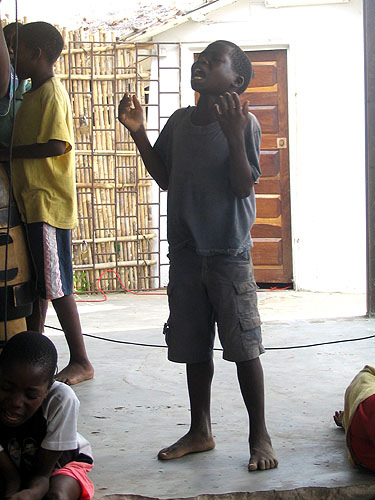


 A 'Mike' for Christ