POINT MADE ALREADY, YOU SAID? (Ha!) CC BY-NC, guccio@文房具社, Flickr
Many people are their own toughest critic. I am. But what’s unhealthy is treating oneself with disdain, and that has been a problem for me at times. I will speak to myself with severe contempt at my stupidity or failure or some other thing.
It wasn’t until the Lord, in his gentle way, checked me one day about it.
What he is teaching me is to not treat myself the way I would never treat another person. Get that: God instructs us to do to others as we would have them do to us, yet I was doing to myself as I would never do to others or allow them to do to me.
I could hear the Spirit within—“Stop saying that.” Then, one day the message became clear: You are a recipient of the grace of God; it dishonors him for you to dishonor yourself. Christ paid too high a price for my well-being for me to side with the Evil One in my attitude about myself.
YOU are Important to God
We are to love our neighbors as we love ourselves (Luke 10:27), or with the same care we show for our own bodies and concerns. The scriptures assume our individual welfare prior to our interaction with others, which is only natural. Paul says, “No one ever hated their own body, but they feed and care for their body” (Eph. 5:29).
Look at common clichés: “Take care of home first” and “Health is wealth”—because if I’m in poor health, or die…
Hear Paul again: “Therefore, as God’s chosen people, holy and dearly loved, clothe yourselves with compassion, kindness, humility, gentleness and patience. Bear with each other and forgive one another if any of you has a grievance against someone. Forgive as the Lord forgave you. And over all these virtues put on love, which binds them all together in perfect unity” (Col. 3:12-14).
So the Lord says to me and us all, why is this any different for you…by you? Cast away fear, regret, worry, and other negative emotions by remembering that you belong to God and are in the grip of his perfect plan for you. He’ll help you sort out the kinks.
“Solomon Dedicates the Temple at Jerusalem” by James Tissot, The Jewish Museum, New York (Domain)
“Therefore the Law has become our tutor to lead us to Christ, so that we may be justified by faith.” (Gal. 3:24)
A major purpose of the Law of Moses was to expose sin (Rom. 3:20). The law itself, however, was not evil or bad for this reason or because it resulted in condemnation and death. Rather, Paul calls it “holy” and “good” (Rom. 7:12-13) because it accomplished God’s purpose in the plan of salvation until it was completed in Christ.
An instructive, long-term secondary purpose of the law was to prepare people’s hearts for righteousness by training them in God’s requirements.
The Faith of Old Testament Believers
I find it important to stop and consider the piety of those who lived under the Law of Moses. Christians perceive Old Testament worshipers as possessing an inferior devotion than theirs because they knew nothing of Jesus. Or, we presume they didn’t understand righteousness by faith, which couldn’t be true since the cornerstone of Judaism is Abraham’s righteousness by his faith in the promise God made to him (Gen. 17) that, subsequently, has become all our faith.
Not knowing Christ or the full revelation of salvation does not dismiss their piety or render it disingenuous. These people lived by faith in God’s promise their whole lives, although they never realized it (Heb. 11:13). Yet God mercifully provided them his law by which they could discern his holiness and their own sinfulness until grace should appear in Christ (Gal. 3:15-22).
The law was a precursor to salvation—a mere bicycle for those God was preparing for motocross one day. And although one could never be justified by the law (Gal. 5:4), it was very valuable for instructing the Israelites about God’s moral character (e.g., the Decalogue).
The Promise Remains
Nevertheless, Paul says, “The law, introduced 430 years later, does not set aside the covenant previously established by God and thus do away with the promise” (Gal. 3:17). Jehovah was strongly central to Hebrew practice and his promise to Abraham was its foundation. The people’s worship and faith were never inhibited but encouraged. This is unavoidable in the Prophets.
Jesus dispels the later Pharisaical notion that God required his Chosen to meticulously subscribe to the 613 statues. How symbolic that is: God sits high in his Heaven and we must climb the rungs to reach him. Yet when we miss one or snap one off, or just tire, we plummet to our deaths. So in breaking one rule, we indeed break them all (James 2:10).
Instead, Christ’s work achieves propitiation and righteousness for all believers, past and present, because it is based on God’s promise, not rules; it is confirmed by faith, not merit. Real devotion…genuine salvation is just that: receiving the promise by faith.
God accepted the worship of Old Testament devotees who served from their hearts in the spirit of the law. Our way of salvation and their way of salvation are the same: by grace through faith.
Boston, MA – Today marked the final public appearance of Rabbi Yeshua on his first U.S. tour. Rabbi Yeshua began his religious crusade in San Diego on June 14th and for two weeks traveled extensively across the country. His meetings largely included preaching, teaching, and personal ministry.
The popular 30 year-old rabbi from Jerusalem is greatly admired by many but controversial to others. He has claimed to be divine. His ministry has several confirmed reports of physical healings, miracles, and heavenly manifestations.
While in the States, Rabbi Yeshua led a massive preaching campaign about the “kingdom of God.” He claims that he is from Heaven and has come to offer humans forgiveness of their sins and reconciliation to God.
CC BY-NC, DM, Flickr
Rabbi Yeshua hosted 16 public meetings that filled the nation’s largest arenas and stadiums. Some of the meetings were broadcast nationally. Two million people crowded the Lake Michigan waterfront in Chicago to hear him last week.
On Friday Rabbi Yeshua was welcomed to the White House by President Bernal.
It was the smaller, unannounced meetings, however, that took many Americans by surprise. Rabbi Yeshua showed up in parks and town squares greeting people and teaching. The Rabbi did announce unplanned events on social media when he was visiting college towns. He has a strong youth following.
Reaction to Rabbi Yeshua in the religious community has been mixed. Many religious leaders believe his message and miracles to be true, but few believe he is the “Son of God.” There are also those who say the Rabbi is a fraud and refuse to believe any of his claims.
Most people say that he is a good person and is very generous to others.
Rabbi Yeshua drew scores of celebrities and politicians to his events. Many have responded positively to him. Most notably, actor Jeffrey Derulis made a public profession of faith in the Rabbi after he says his brother was healed of melanoma by him.
Rabbi Yeshua will address the United Nations General Assembly in September.
We know the term “hosanna” from the New Testament when it was shouted in acclamation of Jesus as he entered Jerusalem on the colt. The people were quoting Psalm 118:25-26 (ESV): “Save us, we pray, O Lord! O Lord, we pray, give us success! Blessed is he who comes in the name of the Lord! We bless you from the house of the Lord.”
Hosanna properly means to save, or to be saved or delivered (hosan-), beseechingly or now (-na). It is a prayer for rescue. With time, however, the word changed from a strong plea for help to praise for its arrival—and this is the context in which it is made of Jesus, the Messiah, entering Jerusalem.
Implications of Hosanna
We all understand the basic meaning of this expression because we cry out for God’s help regularly. Life gets tough, Satan is deviously wicked, and we are frail individuals. We call to him because he is El Elyon, the Most High God, the strongest One of all.
But there are two other connotations of hosanna, one already mentioned: hosanna as an ovation for long-awaited deliverance.
It is the difference between “God, help!” and “Look! God is moving!” Don’t you love it when you notice God acting on your behalf or rescuing someone you love?
Still, in this same subtext, there is a deeper acknowledgement: God is the only one able to save. It’s worshipful—“God, you’ve got the power. If this thing is to be done, you will do it.” Often God has to prove to us that he is far bigger than what we’ve made him out to be.
Job said, “I had heard of you by the hearing of the ear, but now my eye sees you” (42:5)—or we knew of God’s great power to deliver in other’s lives but had never experienced it for ourselves, not until he allowed us to be wedged in just to prove he could pull us out. Thus, we cry, “Hosanna!”
I Need Thee
The final connotation of hosanna is implied: our essential need for God. C.S. Lewis correctly observes:
“God designed the human machine to run on Himself. He himself is the fuel our spirits burn, or the food our spirits were designed to feed on. There is no other. That is why it is just no good asking God to make us happy in our own way without bothering about religion. God cannot give us a happiness and peace apart from Himself, because it is not there” (from Mere Christianity).
I really need God and I’m thankful I comprehend this because many people don’t, including some Christians. Our creature comforts, social connections, and money can make us less dependent on him.
Ecclesiastes 12 is also worth pointing out. “Remember your Creator in the days of your youth before the days of trouble come…” (v. 1). Our need for God is deeper than mere rescue; nevertheless, it is best to know him well before we ever need it. No one learns CPR in the moment of crisis.
Our need for God acknowledges that he knows what’s best for us.
Keep hosanna in mind when you pray and when you praise. Keep it at the heart of you.
I enjoy the kitchen. It’s the process of creating that I like and the reward of making the people you love happy and satisfied. Although cooking demands attention, it’s a great mental escape for me since I tend to live in my head.
My family has come to expect baked sweets from me. I enjoy making them but what gets old is the assumption that I must make (blank) whenever we gather. I’ve tried to give certain recipes to my sisters, but they don’t want them; they want me to make them.
The flip side of doing something well: you get marked for doing so.
In Days to Come…
Maybe I should be happy about it. I suppose I could have a lackluster or all-out bad reputation as the helpless bachelor in the kitchen (#9-1-1). “I can’t make it like you do” might be a compliment and mean “Michael, no one can infuse love and pride into that cake like you do.” It’s sentimental and becomes part of my tradition with others.
It’s the same way with the adages and admonitions our parents and elders gave us. This very moment there is someone’s voice you can clearly hear, a face and gesture you can see, from yesteryear giving you advice that you got sick of hearing at the time. But because you ate long enough from their table of wholesome advice, you are now a better person for listening.
The instruction we received became those folk’s legacy with us even though we weren’t always buying what they were trying to sell us.
Creating a Legacy
I wonder if grumpy Thomas ever rolled his eyes and said of Jesus, “There he goes again with ‘love your neighbor’!” Did any of the disciples need the smallest respite from Jesus? I mean, they listened to every teaching, crowd or no crowd.
That might sound funny (or irreverent) but they surely didn’t anticipate post-Pentecost. They had no clue that all Jesus was telling them would shortly become their saving grace in ministry.
Years later Peter understood the principle well, that his words were to his readers what Christ’s words were to the Twelve; so he explains, “I will always remind you of these things, even though you know them and are firmly established in the truth you now have” (2 Pet. 2:12). Moreover, it was imperative because he knew he would soon die and, like a good parent, wanted to make sure his children were ready for greater responsibility.
What an honor God has granted the biblical writers, for we prove the point of good and lasting heritage whenever we search out certain ones for our devotional needs. We desire that voice because…no one touches our hearts like David does, no one says it quite like Paul.
And there’s something you do with others that you may or may not be aware of that really is making a difference in someone’s life, a legacy of your own. It could very well be what they’re balking at right now. Just keep at it. It’s sinking in…time will tell.
Jesus…all of our favorite person in the Bible—don’t you love him? But what was he like? Only a relative few ever met him. If you’re like me, reading the Gospels is exciting because he’s a pretty charismatic guy. But it’s also an imaginative experience because you wonder about his personality.
Side note: for most of us, within 50 years we all will have met him!
Thus, we’re left relying on the biographies, the Gospels. They help us piece together things about his character and piety, but that’s about all, although “all” is the basis of everything we believe, pretty amazing. To have influenced 12 men to shake the world for God, Jesus must have possessed incredible personality apart from his divine gifts.
So on a lighter note today, I’ve put together nine standout qualities that I notice about Jesus; and, at the risk of appearing sacrilegious, I’m going to reinvent him in the character traits of those we see almost daily. This is my take on Jesus.
#1 – Jesus was Unassuming, like Brad Pitt
CC BY-SA, Blake Nelson Boyd, Wikimedia Commons
Many refer to this quality as meekness. I sense that Jesus was not just a gentle and kind person, but that he didn’t seek to draw attention to himself. So, you ask, why in the world Brad Pitt? Well although the ladies and media make a big deal over him, I’ve never seen Pitt feed his ego the way we ogle him. Instead, he keeps out of our attention and has a reputable humanitarian record. I think Jesus was like this. It was never about him but his Father and the kingdom until it was imperative that the people knew who he was.
#2 – Jesus was Down-to-Earth, like Hugh Jackman
CC BY-SA, Grant Brummett, Wikimedia Commons
I think Jesus was very approachable. I don’t think he took himself too seriously either. I like to think that he and the disciples cracked up sometimes and had fun together. Hugh Jackman…well this is his reputation: a good guy and a good sport. As I often say, we need to rephrase the question and ask why sinners wanted to be around Jesus. Yes, he went to them but they loved him back.
#3 – Jesus was Eccentric, like Johnny Depp
CC BY-SA, Caroline Bonarde Ucci, Wikimedia Commons
C’mon, or am I the only one who’s noticed this? In the Gospels Jesus is “THE MAN with the plan,” but he’s just a little…different sometimes, especially with the disciples. You can sense it in their confused inquiries. When Jesus predicted his death and spoke prophetically of his great return, it wasn’t the easiest thing for them to digest. It didn’t make sense: How could someone who used the power of God at will end so horribly? His otherworldliness must have seemed a little odd. And speaking of odd, just think of Johnny Depp; and if that doesn’t do it, remember him in “Charlie and the Chocolate Factory”!
#4 – Jesus was Brooding, like Jim Caviezel
CC BY-SA, Ewen Roberts, Wikimedia Commons
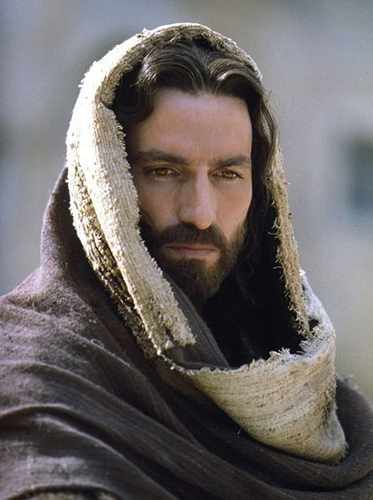
Intense. Serious. Observant. Pensive. In his head. Introverted. It seems Jesus retreated to privacy not just to pray, but also to recharge. I understand this because I’m this way. People often misunderstand this type whom they deem anti-social and quiet, which is not accurate. We love spending time with others, but alone time is essential to that experience. If you know Jim Caviezel—who portrayed Christ in The Passion (top), himself a devout Christian—you know that he’s the epitome of this quality.
#5 – Jesus Loved People, like Cory Booker
CC BY-SA, David Shankbone, Wikimedia Commons
If you are familiar with Cory Booker’s political career, then you know that people are his No. 1 priority. His leadership and commitment as mayor to the betterment of Newark was transformational and impressive, to say the least. Jesus loved people. He not only cared about their souls; he was concerned about their total well-being, which is implied in the biblical concept of salvation. Remember his concern for the people, their hunger and fatigue, after they had followed to hear him preach? He demonstrates to us how to cherish one another and models a proper humanity.
#6 – Jesus was Smart, like Denzel Washington
CC BY-SA, Faulkenauge, Wikimedia Commons
Not necessarily intellectual and genius, but savvy and street smart. The Pharisees and members of the Council would do everything to trip up Jesus, but he was never outwitted. Yes, some of it was the Spirit of God in him, but I also think he was adroit and possessed a keen mind. Some of his rejoinders are astonishing. No wonder he had to dash away from the temple officials! Denzel…cool, calm, and collected God-fearing man—but perceptive.
#7 – Jesus was Articulate, like Bono
CC BY-SA, David Shankbone, Wikimedia Commons
When I say articulate, I don’t just mean well-spoken; I mean abreast of the issues, contributing to the important matters of his time, and in that way influential. I like that Jesus resisted the status quo, that he made the real issue a point of contention when others simply refused to rock the boat. Bono has probably gained more fame today as an activist and philanthropist than as the frontman for U2. He forces us to see what is important and needs attention.
#8 – Jesus was Fit, like Carter Oosterhouse
CC BY-SA, Rorincent, Wikimedia Commons
Skillfully so. He assumed his trade as a craftsman-mason, or carpenter, from his father Joseph and that probably kept him lean and agile. Certainly he required some measure of fitness to travel and preach like he did. Now, you didn’t think I meant fit as in sexy, vain, muscles-for-no-reason “fit”, did you? Then you understand why Carter Oosterhouse is a good choice.
#9 – And my Jesus looks sorta like this Israeli guy, but not all “modely”
See him in his tunic, cloak, and headdress; his belt and sandals. See him through the eyes of the widow at Nain coming to show you compassion. Picture him standing before an impressive crowd teaching, Mary off to his side remembering back 30 years when Gabriel startled her with the news. How do you see Jesus?
“In my alarm I said, ‘I am cut off from your sight!’” (Psalm 31:22)
The psalmists confess what many of us won’t: that we don’t have it all together.
Have you ever read Psalms—I mean really read it? It has to be the most relatable book in the Bible. I am floored by the range of emotions we see from these God-fearers, their intimacy and sincerity, their indignation and rage.
And I love it. It makes me feel a little more normal when I’m stressed or tempted or miffed with God.
Peering Into Our Hearts
The tones of cheer and praise in Psalms are as obvious for the dark and gloomy ones that ensue. In Psalm 42, for instance, we detect signs of the speaker’s depression and frustrated search for God: “I say to God my Rock, ‘Why have you forgotten me?’” (v. 9). I love the nuances and implications that often arise from a text because they add color and depth to a scene and teach us by training our eyes on the unapparent. One thing I learn from Psalms is to really understand myself, how I respond to circumstance, how to feel and manage my emotions, how to submit them to God.
It’s important because what we can fail to notice is how impacted our emotions are by events and circumstances, the stress of them, although they may not be critical at all. You see, it’s the emotional aspect of our lives that often waylays us. Situations can be handled—we pray to God for as much—but we, the caretakers of our souls, are slow to anticipate and prepare ourselves for the emotional toll that can follow.
We never thought our circumstance would cause us to make rash decisions or to become temperamental. We didn’t expect to be crept upon by a sneaky depression. We surprised ourselves with our excesses, blinded by pleasure and glee.
Our emotions will trip us and Satan…well he watches unguarded doors.
Healing Our Souls
We’ve witnessed too many times of late the tragic consequences of people living life bottled up. It is necessary to acknowledge our feelings and give them healthy expression; it is also important to share our feelings with others.
I reject the triumphalist spirituality that suggests I keep happy and overcoming, or that it’s a sin or faithlessness for me to feel pain or experience sorrow. I also reject those on the opposite end, the hill climbers, whose faith only identifies with plight. They seem to start every conversation with “Hey, bro, what are you struggling with?”
I haven’t quoted a bunch of scriptures here, or said Jesus twenty times, yet this might be the most freeing news for some people, Christians included. We don’t lose our faith because we agonize; we just must not let pain cause us to lose our contentment in God.
“Why, my soul, are you downcast? Why so disturbed within me? Put your hope in God, for I will yet praise him, my Savior and my God.” (Ps. 42:11)
This post is inspired by Kate Bortell’s “Wearing Wellies in the Rain”. I hope you’ll acquaint Kate, a truly delightful person, and kick back with some tea and enjoy her folksy, whimsical posts.
I worked on the railroad for a brief time. It’s an experience that never bores, although there are aspects about the job that are truly unenjoyable: the harsh schedule, work at any hour of the day or night, and the dangers of being in the thick of nowhere not knowing who or what is watching. Oh yeah, getting run over or crushed isn’t consoling either.
Trainmen also have to work through any weather condition, so it’s important to know the forecast and not lack proper gear. I was lucky enough to forget rainwear on the one day of the year Noah decided to return for a visit. The most important required gear, however, is footwear, work boots. They’re crucial for riding the cars and walking on the ballast, among other things.
Working on the rail was the first time I ever donned work boots, and it was a new experience for me. Further, I bought a pair of loggers—you wit me? Anyway, I knew what Justin (the manufacturer) told me about my boots and assumed that my $170 meant I had a good pair that met railroad guidelines…that’s that.
During a job one day following nearly two weeks of rain, we had to stop the train and figure out a move. I had to exit the engine and get over to the other side of a gully that was swollen with water; it was a virtual pool. The only way I could reach the other side was by jumping far enough and landing on as much soil as possible without soaking myself. It was doable.
So I leapt.
Nevertheless, I still ended up in some water. In fact, I stepped so far down into the pool that I waited to feel my precious boots filling and my feet swimming. But nothing.I got up on the hill and still nothing. My thick, heavy, waterproof work boots were so well-made that six or seven inches of water didn’t matter. I couldn’t believe it.
Dry Feet in Wet Places
This story makes me think about the Hebrew boys: Shadrach, Meshach, and Abednego. And what it causes me to reflect on are the hard places that we’ll inevitably encounter in life and the tough choices that will attend them. We’ll even make the right decisions but still come up short.
There are going to be situations that you know will be as the cliché goes—“all over but the crying.” But it will be in those moments that God will let you see and experience all the prayers prayed on your behalf, all the worth of your service, the full backing of Heaven that has always been yours. For every protection was built-in and has been with you from the start.
Your feet will keep dry; your clothes won’t burn.
“When you pass through the waters, I will be with you; and when you pass through the rivers, they will not sweep over you. When you walk through the fire, you will not be burned; the flames will not set you ablaze.” (Isa. 43:2)
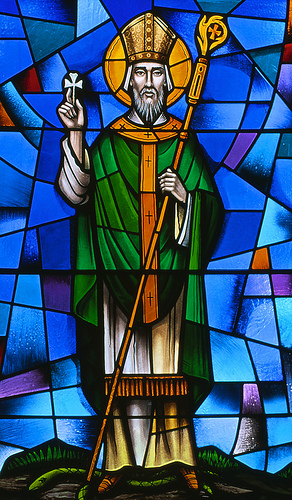
Most people know little about St. Patrick other than he’s the patron saint of Ireland, his association with the shamrock, and the Day the world honors his memory and celebrates Irish culture.
Oh yeah, green.
I used to be one of those people, but I’ve discovered how much more there is to know about him. In fact, Patrick’s life reads not unlike the life of the apostle Paul, only with more historical insight. Allow me to recount some important and truly fascinating parts of Patrick’s life and briefly share what they teach us.
What Patrick Teaches Us
1. God will use misfortune in our lives to prepare us for great things to come. Patrick hailed from a wealthy Roman family living in Scotland (or Wales). His father was a municipal councilor and a deacon; his grandfather was a priest. Patrick, however, bore no interest in religion.
Around age 16, Irish bandits attacked his family’s estate and abducted him. He was sold into slavery to a tribal chieftain and druid high priest. For the next six years Patrick worked as a shepherd. He avows, however, that it was during that time that his faith increased and he grew close to God, becoming engrossed with prayer and ignited with spiritual fervor. He also acquired the Celtic language and learned the customs of the druids.
In his sixth year, during a time of prayer, he heard a voice say to him, “It is well that you fast. Soon you will go to your own country.” and “See, your ship is ready.” Patrick then fled some 200 miles to the coast where he discovered a ship ready to sail, but he was denied boarding by the captain. Pleading with God, he finally got aboard and sailed three days to Gaul (France) but wandered around 28 days with his compatriots, wearied and faint with hunger until his fellow, non-believing travelers challenged him to beseech his God for food. No sooner than Patrick finished encouraging them about God’s providence, a herd of wild boars appeared on which the group subsisted for the next two days. Soon enough, Patrick reached Britain and immediately devoted himself to the study of ministry.
Did you think of Joseph, or Moses? Patrick’s story gives us hope that when our world comes crashing down, there may be a higher plan at work. We rarely notice in those moments how we’re gaining…experience, skill, connections, witness. Yet God is indeed orchestrating his plan, and we’ll marvel to see how it all comes together.
2. God gives us grace for specific tasks. A few years later and more than once, Patrick received visions prefiguring his ministry. In one particular dream, he saw an Irish man come to him with a bundle of letters. Opening one, it read “The Voice of the Irish”; then he heard children’s voices coming from the letter beckoning him to return to Ireland. Meanwhile, Patrick found mentorship with a renowned bishop and entered the priesthood. He also made several missionary journeys.
At this time the Pope was ardently stamping out heresies, and it was during the (first) Council of Ephesus that Patrick received his commission to take the gospel to Ireland. The task had previously been granted to Palladius, the first bishop to Ireland who preached there five years prior to Patrick. But Palladius was fiercely banished from Ireland and abandoned further ministry for fear of a certain chieftain.
It was at this time that Patrick’s mentor suggested him to the Pope. Patrick had been a faithful disciple for 18 years now, was full of wisdom, and bore some renown. The Pope approved and bequeathed to him the name Patrick, meaning “nobleman”. Patrick’s real name is believed to be Maegwyn Succat.
Patrick explains in his Confession that people didn’t understand why he would endanger himself to evangelize a barbaric society that knew nothing about God. People secretly talked about him, yet he never viewed it as their malice but puzzlement. Still, he was not phased by it and admits, “Indeed, I was not quick to recognize the grace that was in me.”
God chooses us for the tasks he has given us the grace to handle. Palladius could preach in Ireland, but Patrick had the facility to reach Ireland like no one else could because his whole life had prepared him for doing just that. And, as you will see, he possessed the heart, character, skill, and focus to obey God in this calling.
3. Grace should characterize our dealings with the lost. Patrick returns to the port that scared off Palladius, and the druids quickly impeded him. He withdrew and opted for a friendlier route into Ireland. So he returned to his old master with the intent to pay the price of his own ransom and to bless him in the name of Christ in return of the cruelty he had experienced. But his master feared Patrick’s retaliation upon receiving word of his coming. Shockingly, he burned down his property and committed suicide in the fire.
Travelling northward, Patrick encountered a chieftain, Dichu, intent on halting his journey. Dichu drew his sword to strike Patrick, but his arm suddenly froze. He was unable to move it until he submitted to Patrick. Dichu was so deeply affected by the miracle and Patrick’s kindness that he inquired of the gospel and subsequently offered Patrick a large barn to use as his church in the village. This incident is recorded as Patrick’s first miracle, and the church became a favorite retreat for Patrick later in his life.
Patrick was a diligent ambassador for Christ throughout Ireland, especially among the tribal leaders and kings. Patrick’s strategy was to convert chieftains who might convert their clans. He tirelessly worked to share the faith with them, regularly baptizing them and their families as converts into the church.
The maxim goes, “You can draw more flies with honey than you can with vinegar.” Patrick’s life and ministry prove the point well. We hinder ministry by ramming the gospel down others’ throats or by having something to prove with our beliefs. Jesus is the subject of our faith, and Jesus must be the essence of our approach to others.
4. God protects his servants and will confirm his work with miracles, if necessary. Dichu informed Patrick of a regular pagan celebration that was approaching at which all the chieftains and priests would be in attendance. Patrick decided to accept the occasion as a chance to proclaim the reality of the one true God. As part of the ritual, the ruling monarch of Ireland had decreed that a light, or bonfire, should be lit on a certain hill and that there should be no other bonfires seen in Ireland at that time.
It turned out to be March 26—Easter Sunday—in 433 A.D. Patrick, in full episcopal regalia, and his contingency were stationed at a monastery at the opposite end of the valley. There they lit a light in defiance of the decree. The king sent a band of warriors to kill Patrick and to extinguish the fire, but Patrick and his entourage eluded them and neither could the fire be extinguished. When summoned by the king, Patrick explained that he brought a new light, the light of Christ.
It is reported that a spiritual showdown then occurred. The druids using their incantations swept the hills with darkness, but Patrick prayed and the dark clouds retreated and the sun shone brightly. One of the druid priests was seen levitating under a demonic power, but at Patrick’s prayer he was dropped against the rocks. Having witnessed the power of God, many of the chieftains and the king’s own noblemen bowed to Patrick. Moreover, the king permitted Patrick freedom to preach Christ in Ireland.
This battle, so reminiscent of Elijah combating the prophets of Baal, is considered the pivotal moment the gospel gained a foothold in Ireland. Other miracles are recorded about Patrick, including those detailing his escapes from death and prophetic insight. Further, we are reminded of the words of Gamaliel: “Leave these men alone!…For if their purpose or activity is of human origin, it will fail. But if it is from God, you will not be able to stop these men; you will only find yourselves fighting against God” (Acts 5:38-39).
Patrick is a remarkable example of a life given to the gospel of Christ and is rightly called the patron saint of Ireland. He baptized more than 120,000 Irish and planted over 300 churches. Let us love and serve Christ and others with the same diligence and fervor Patrick possessed.










 A 'Mike' for Christ