Acting Against Your Better Judgment

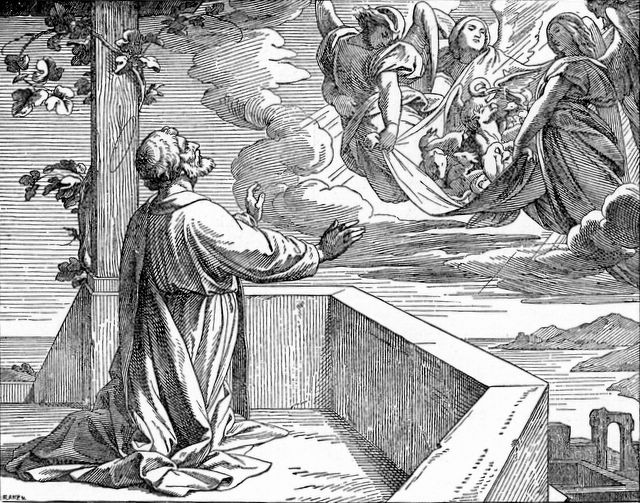
Peter's Vision by Henry Davenport Northrop, 1894 (Domain) Wikimedia Commons
Peter’s Vision by Henry Davenport Northrop
Wikimedia Commons (Domain)

I enjoy provocative dialogue. The topic and interlocutor don’t matter; if it’s exploring theory and ideas, I’m in. What I like even more is leading those conversations and debates and challenging people to consider various aspects of the subject regardless of their stance on it. It forces people to think more broadly and engage where they otherwise would not.

That’s how our minds grow. For instance, most people don’t like reading dictionaries and encyclopedias, something I enjoy doing. But they would be hard-pressed to take away nothing from doing so; learning is the point of those books. Further, building vocabulary and adding new information extends one’s range with language, knowledge, and, importantly, concepts and boosts intelligence. Yet what we’re not exposed to can never be understood.

“That’s How I See It—Next Point!”

Clearly, I like discussing the Bible and faith matters. I recall an exchange between some persons in which I presented Pauline injunctions in the Pastorals regarding church order. I asked for their assessment and opinions of Paul’s instructions for contemporary church life. I quickly noticed something peculiar. They were adamant, even defensive, about their interpretation and application of Paul’s admonitions.

The conversation was surprisingly difficult. I found myself struggling to make these people think deeper and address other implications. Trying to be a good interrogator, I fought to keep back my own opinions from being too quickly apparent; but that failed because the messenger was getting shot! I was saddened that we ended frustrated over the scriptures, but I also hated the fact that they didn’t allow themselves to think from all angles about the topic. Instead, they looked at it and sized it up too quickly.

I was disturbed about their attitude on many levels: How will one relate well with people in an increasingly pluralistic society? To what degree do you expect your own opinions and beliefs to be respected? Are there things that you could be missing? And when it comes to God and spiritual things, what happens when God leads us out of our comfort zones and against our personal rules? Intransigence, or being uncompromising, can render a person incapable of being led by the Spirit. They will close themselves off from illumination and the Spirit’s impressions on the heart.

It is no less a form of being unteachable and fleshly. Consider it: when God puts it in one’s heart or mind to act in a certain manner, to assist one or speak something to another, that person might think to do it but will fight it or justify an excuse to act contrary to what he heard from the Lord; and that’s all because we know what we know and don’t sway from our position.

A Vision Worth Remembering

Peter’s dramatic vision of the sheet of unclean animals (Acts 10) is a worthy reminder that we probably shouldn’t be too quickly set in our ways and close-minded when there are other viewpoints and options. The vision is really interesting because God corrects Peter on the revelation of grace to the Gentiles, to whom one might assume God was calling Peter. Instead, Peter was called to the Jews (cf. Gal. 2:7-9).

It’s important to God to get our general thinking straight and speaks to the personal constitution he expects of his people, indeed humankind.

In my post entitled “Rogue Conviction” I write, “Perhaps a belief is to be possessed or espoused, not vice versa, lest believers (in anything) risk being driven by their beliefs and so become fanatics. People who sacrifice themselves to their convictions often become instruments of those ideas to beat others into subjection.”

You know, this is the attitude that put Christ to death, and it is critical for us Christians to get it right.

Trusting God for Results

CC BY-NC-ND, Frits Ahlefeldt Laurvig Flickr

“I planted the seed, Apollos watered it, but God has been making it grow.” (1 Cor. 3:6)

One of my friends has begun attending church again and moving closer to God. He’s found a congregation he enjoys and has even gotten his girlfriend and kids attending regularly. The pastor has drawn close to him and often expressed an interest in his involvement there; however, this started becoming a problem.

Participation was always the topic. There was a place for him ‘here’, an opening ‘there’. “I’m just waiting on you” is how it would be put to him; and that was the problem. My friend isn’t even a church member yet, a step really important to him. Further, whereas he was usually excited when Sundays came around, now he started begrudging the fact.

So he called me. Listening to him I knew the only option he had at that moment was to speak to the pastor and express his truest feelings. I could understand the minister’s excitement about this young man’s budding faith and his eagerness about his further involvement—not desiring to see him leave—yet it was overbearing.

If I know anything, I know that 1) men who don’t care about church aren’t there and 2) they certainly aren’t candid about their lives with the pastor. In fact, many men distrust pastors.

This minister needed not fear losing my friend because he was being edified and wouldn’t be returning each Sunday if he wasn’t. He just needed to be allowed to be his own man and make his own decisions at his own pace.

Get Thee Out of the Way!

I’m thrilled to see the Holy Spirit moving in my buddy’s life. It’s something I’ve cried out to God about for a long time, for both him and his girlfriend; now I’m watching God move in their lives.

As I expressed, I know the pastor’s intentions were good, yet they characterize something I’ve too often observed: well-meaning Christians who won’t let the Holy Spirit do his job.

CC BY-NC-ND, Frits Ahlefeldt-Laurvig Flickr
CC BY-NC-ND, Frits Ahlefeldt-Laurvig, Flickr

We’re all familiar with this usually in the form of browbeating preaching or dogma. Folk can hardly get a foot in the church door before being barked at with a litany of orders about how they should and should not look, think, act, and any other unnecessary or premature modification. We only prove how well we’ve missed the point about grace.

I recall a sermon once that really provoked me. The preacher expressed amazement that he can preach one sermon and with it the Holy Spirit is able to preach hundreds of sermons to the people present. Thus, it was his task to be the best preacher and communicator of the Word he could possibly be; but the hard work of changing the heart fell to the Holy Spirit to accomplish.

We’ve got to know our place, which is not supplying God a Hagar thinking we’re rushing the process along. Instead, that place is making ourselves available to folk, plainly discussing faith issues, genuinely befriending people, and storming heaven with our prayers for them. But after that we’ve got to step aside and let the Lord be God in their lives. Results are his job.

10 Questions for Chris Hendrix

Today The ‘Mike’ begins a weekly interview segment called “10 Questions” featuring fellow bloggers, professionals, and other folk you might be interested to know. Here I chat with my blog buddy Chris Hendrix of Devotions by Chris who welcomes you in the video.

Chris, your readers are familiar with a series of events in your life that influences the character of your blog; you’ve also shared those details on this blog. So what happened to you on and around September 25, 2003?

I hit rock bottom in my life. In the previous five months my wife ran off with another man; the building I leased for my business didn’t renew my agreement; I had to find and build out another rental space while being gouged on rent where I was; I had to take on a business partner to help; I continually ran into issues with the build-out; the IRS came after me for back taxes; and I faced bankruptcy. On September 25th my partner, seeing I was against the ropes, took my business from me.

My brother called me hourly to make sure I was alive. He told me that he couldn’t have survived everything that was happening to me and would have ended his life. I actually considered it when the business was taken from me. That’s when I laid on my living room floor, crying, and told God, “I can’t do it anymore. This has got to be the bottom. I won’t survive if it falls out again.” I felt God say, “Finally.” He reminded me of his words to Paul: “My strength is made perfect in your weakness.”

I went to the calendar and wrote “The Bottom” on it and vowed that no matter what happened or how long it took, I would climb out of that hole. Each year I celebrate September 25th as the day I learned to fully trust God’s strength in my life. It reminds me that I can’t make it through life alone. I wasn’t created to; I was created to need God. I fail in my own strength, but in his strength I am more than a conqueror.

What is the purpose of Devotions by Chris?

The purpose of my site is to bring daily encouragement to other believers who struggle how I once did. I use everyday life stories, analogies, and God’s Word to help believers grow in their relationship with God. I want readers to start their day thinking about God by reading one of these short devotionals. I hope they find practical advice for taking that next step of faith.

How do you respond to the question “Why does God allow pain?”

I wrote about this in a piece called “Why Bad Things Happen to Good People”. I believe God uses these times of pain in our lives like a gardener uses pruning shears. In order to grow, we must be pruned. In order to fully trust God, we have to come to the point where we trust his strength more than our own. I like to say that the amount of pain you endure is proportionate to the amount of joy you are capable of experiencing. I know joy because I’ve known pain.

You’ve led several mission trips to Haiti, including one from which you’ve just returned. What is the focus of these missions?

James 1:27 says that pure and undefiled religion is caring for orphans and widows. Haiti is the poorest country in the Western Hemisphere. Between the 2010 earthquake, the AIDS epidemic, and 70 percent unemployment, there are over 400,000 orphans in Haiti. Parents have to choose whether they will live or their kids will live. In every case, the parents choose themselves.

Coreluv.org
Coreluv.org

I work with an organization called Coreluv. What I do is take teams and introduce them to the problem. I put them to work in the orphanages and show them how the little they have in their hands is enough to be used by God.

We work all day painting, feeding, building, or whatever is needed to make life better for these orphans. I call it putting sweat equity in the Kingdom of God. We love on the kids, play with them, and share the hope that Jesus brings. We also visit one of poorest communities to feed kids whose parents can’t feed them. We’ve built a school to educate these children and hopefully help them break the cycle of poverty.

How else do you serve in ministry?

I’ve always considered myself a part-time minister, but my pastor called me out on it a few weeks ago. He told me about his ordination; my grandfather was the presbyter of his ordination. My grandfather told him, “There is no such thing as a part-time minister. You can have a full-time job on the side; but if you are called to ministry, you should be doing it full-time.”

That said, I blog daily, I volunteer with Coreluv, and recently I assumed leadership of a young couples group at my church. Also, I connect with people through church or my website and pray daily for them. I have a rule that if you ask me for prayer, I stop everything that I’m doing and pray for you right then. That way you know for certain that I’ve prayed for you.

You say that your drive to work is a prayer time in which you focus on a blog topic. What is your writing process?

I spend several hours a day in prayer as part of my daily routine. I once heard that D.L. Moody prayed for eight hours a day. That’s been my goal. I start each day with a quick prayer thanking God for the day and asking him to speak through me in his word. Then, I read scripture for thirty minutes. After that, I continue praying as I get ready for work.

I commute an hour each day, so I use that time to pray instead of listening to the radio. Once I get to work, I pray that God would speak through me so I can write the right words; then he can bring the right people to read them at the right time. Thereafter, I sit in silence until I hear from God, and I write once I do. I post to my site and use HootSuite to time tweets and Facebook posts throughout the day.

What are “Free Fridays” on your blog?

I got the idea for “Free Fridays” at a writer’s conference last year. I kept hearing how fearful writers felt putting their work out there for others to read. I realized how much fear plays a role in keeping so many Christians from doing what they are called to do. I decided to write a post each Friday that would help Christians get free of something that holds them back. Then, I decided that I would drive traffic to these posts by offering a free book to one reader. So not only do people get practical advice, they also get the opportunity to win a book.

What Christian WordPress blogs do you regularly read?

Bea MusesUnshakeable HopeDirector B, Deeply Rooted in Himand A ‘Mike’ for Christ

Where do you see yourself ministry-wise in 10 years?

In full-time evangelism. I believe I am called to be a part of the next Great Awakening and will be instrumental in winning, training, and utilizing laborers to bring in the final harvest. My first post, “The Vision”, is about this.

What are two things readers would be surprised to know about you?

I do all my writing on an iPad. I don’t do any of it on a laptop or desktop. Also, after three years of marriage, my wife and I invited her parents to move in with us. So my in-laws and my wife’s two sisters live with us. 

What questions do you have for Chris? 

Read more by Chris at his blog Devotions by Chris.

Beware Satan and His Crooked Hoss!

CC BY, Todd McCann, Flickr

One day years ago I had to pick my mom up from work. Never tardy, I started arriving early just to read or listen to the radio. The parking lot was always too full for my liking, so I would park in the grass on the quiet road in front of the facility until I saw workers exiting.

This day I parked perhaps a car length behind a trailer truck; it seemed to have warded off the other cars that usually lined up there. I thought nothing of it and relaxed listening to the radio. What came next, however, shot me straight into a panic. The truck suddenly reversed giving me little time to react. I went to start the car to back up but only managed to blow the horn trying to get the driver’s attention. Didn’t he see me?

Not at all—the truck hit the car and started pushing it…and pushing. I kept calm, still on the horn, but grew alarmed unsure if there was a driver in the truck at all or if the car and I would end in the gully feet to the right, crushed.

Fortunately, it was over in seconds. The truck stopped and then pulled onto the road. The driver never knew I was there.

Satan Goes About…Don’t Go to Him! 

I could make arguments about how the trucker should have seen or heard me, but the problem was quite simple: I shouldn’t have parked behind the truck. Or, since there was no place to park in front of the semi, I should have given more space between us and made sure I was in the driver’s view.

In the end, I had badly positioned myself.

That’s something I don’t want to do in life. Who prepares to fail or places themselves in a position to be rescued? Honestly, I don’t think anyone does, even the people who never see how their habitual God-awful choices precipitate their undoing. Moreover, this is the whole reason why people get degrees and retraining and become proactive about their health or parenting. The consequences of bad positioning can be costly.

God tells us the same thing (Rom. 12:21): “Do not be overcome by evil, but overcome evil with good.” Said another way, Satan’s drives that big rig—and he saw you park behind him. Get anywhere near him and he’ll find a way to run you over.

And there’s the point, robed in church bells and angel voices: don’t go near him.

I Learned Grace in a French Subway

CC BY-NC, Steve Harris, Flickr

I was a tourist but strode around modest enough to not look like one. Just days into my dream vacation, it was going better than I could’ve imagine. There was much English spoken in Paris, making it easy for the less-than-fluent types like me. Roaming off the beaten path was amazing for the architecture, vintage shops, and museums that disclose themselves to those who dare venture away from common sightseer targets. But when it was necessary—and it always was—the subways worked like a whistle.

Cluny-La Sorbonne Station, Paris CC BY-NC, Sean_Marshall, Flickr
Cluny-La Sorbonne
Sean_Marshall, NC

Each station of Paris’ Métro bears its own unique character. They are discernibly Art Nouveau in style and sometimes littered with incredibly vibrant and creative graffiti. These surprisingly immaculate underground labyrinths invite the very thing you don’t do there, which is hang out. After familiarizing oneself with train tickets and cards, the only task left is to learn navigating stations. Some were small and others were compact cities, like back in Tokyo.

Arts et Métiers CC BY-NC, Steve Calcott, Flickr
Arts et Métiers
Steve Calcott, NC

Statistically, safety was far more a concern here than in Japan. After all, I was again in Western society. I had been warned about subway pickpockets and even discerned a few. They targeted people in the busy vestibules. Usually I’d pass right through those to sometimes be alone in long, tiled corridors and tube platform areas with nothing but Syrian-arched exits eyeing me with foreboding.

In Japan I had relearned fear, which was the strangest thing I ever had to do in life. Being on dark streets at three in the morning is a world of difference in Paris and in Japan—the difference between witnessing car theft and having nothing at all to fear. Nonetheless, I had no problems with people.

The only hiccup I had occurred the day I entered the one station that immediately put me on edge. It was dark and creepy just entering it. I hated the way the attendant’s booth looked the part of a junkie’s lab and the way its neon lights harshly smacked the cold concrete that imprisoned the area. It made the darkness even more apparent. No tourist could feel comfortable here.

Cité CC BY-NC, Talus, Flickr
Cité
Talus, NC

Nevertheless, the routine was the same: feed my card into the machine and pass through the turnstile—but not this day. For some reason, the gate rejected it. I tried it again and it spit it back at me, again. What’s going on, I thought, other travelers passing around me now. That’s when you start re-educating yourself with the basics while mumbling in terse staccato: This is the card. Card goes into slot. Slot is supposed to accept card. And the machine goes “Nuh-uhh!”

Couloir CC BY-NC-SA, Possamai, Flickr
Couloir
Possamai NC-SA

I kept trying while knowing inside I was avoiding the obvious just a few feet behind me. I knew I was gonna have to oil up my French and talk to the agent about the problem. What a novel idea in France! I’ve never been a very confident speaker of French despite diligently studying it half my life. I heard the attendant on her microphone talking to someone, so I avoided the issue a little longer thinking the card might still take.

I was mentally at a loss with this machine. Beads of sweat formed on my forehead because I had now lost my cover and become the dumb tourist. Finally, I turned toward the agent’s window only to be met by her fluster and steely gaze pointed right at me. That’s when I realized she had been hollering at me the whole time.

And, in French, she had been telling me—the one who had spent all this time fighting the machine and worried about his card and dreading French and hating this eerie location—it’s free. And I walked through the turnstile.

Stay Low: A Spiritual Life Lesson

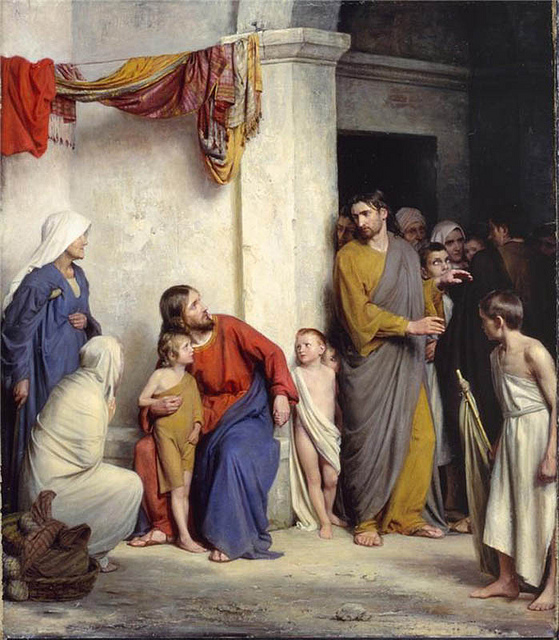
"Suffer the Children to Come to Me" by Carl Bloch, Frederiksborg Palace, Copenhagen (Domain)
“Suffer the Children to Come to Me” by Carl Bloch, Frederiksborg Palace, Copenhagen (Domain)

That Sunday morning was too hot and muggy for anything. But that’s summer in Japan. I and a newly-arrived co-worker had a half-mile hike to the church after a short train ride. Without a cloud in sight, the sun was merciless and exacerbated the strain of the uphill trek; we walked fast to end the baking quicker. This was my first church service since my own arrival two months earlier.

When we arrived, sweating and exhausted, we couldn’t figure out what we were seeing. We had already been met by running water and now we saw why. Everyone was outside standing around a long bamboo chute with water running through it…not the usual Sunday doings. Someone at the upper end dropped noodles in the water, and people with chopsticks—a pair of which I was quickly handed—feverishly grabbed at them to catch and eat. The summer tradition is called nagashi-somen and everyone was having fun.

I knew I was gonna like this church.

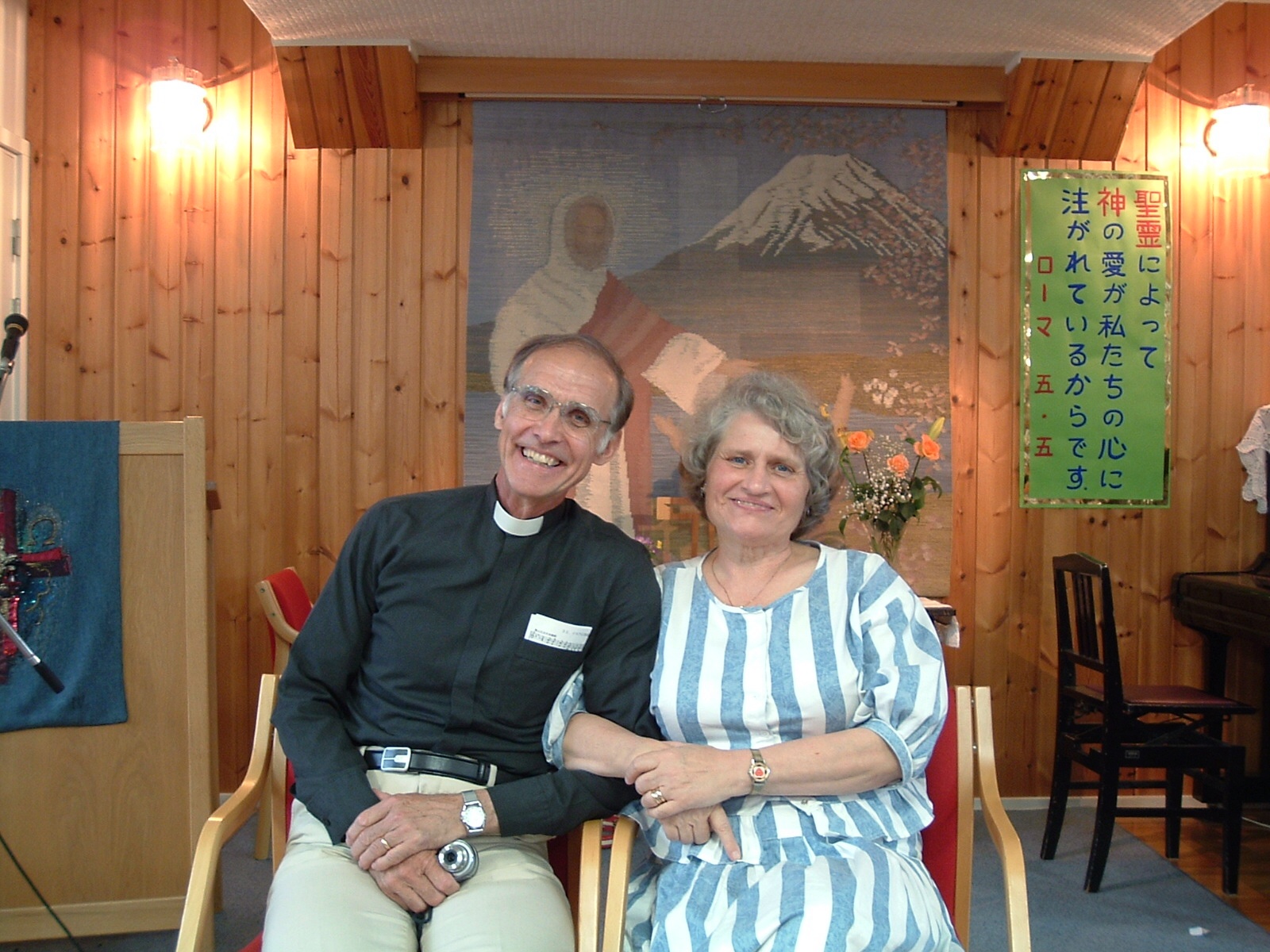
Almost immediately I met the pastor, Bo Dellming. He was a tall, jolly fellow, the very idea of the word “parson”. That day was the beginning of a meaningful pastoral relationship with Bo; I continued attending the church from then on.

Bo & Kerstin Dellming

Good and Faithful Servants

After accepting Christ in his early 20’s, Bo, a Swede, determined that he owed God his life and decided to attend Bible school. Upon graduating—it’s funny to hear him tell it—he discovered an ad in the local newspaper calling for people to serve God on the mission field in Japan. He knew nothing about Japan, but this soldier had found an opportunity to serve. So throwing all caution to heaven, Bo became a missionary in Japan and never looked back.

That’s been over 50 years now.

Kerstin, his wife, also Swedish, hails from a ministry family. Her parents were missionaries in China, and her father was a Bible translator there.

The Dellmings have long since mastered Japanese and have unceasingly forged ministry in the spiritually dark country. In addition to raising their own family, a few generations strong now, the Dellmings have built a devoted congregation and a charming Swedish-inspired church and parsonage complex in Fuji City, which is Takaoka Chapel/Fuji Christian Center.

Stabbed with Love

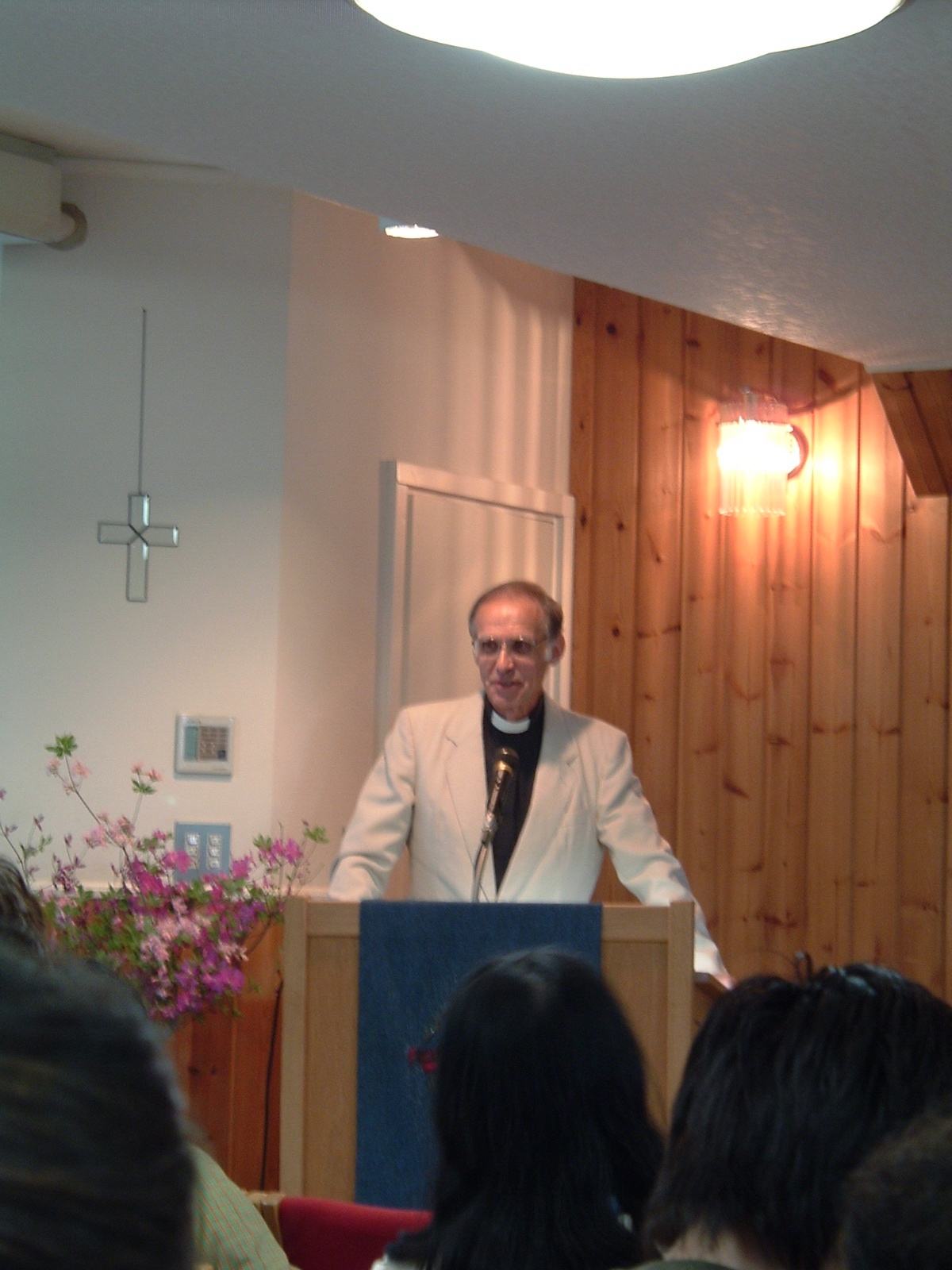
Pastor Dellming is a compassionate man and it shows in his teaching and leadership. Whenever I was with him, I saw Jesus—plain and simple. No one has emulated Christ more to me. He is certainly a soldier for Christ but the kind devils don’t expect: the ones who love the hell out of people. Don’t discount that type of warfare. It’s real, although the enlistment is small.

Pastor Dellming preaching

Pastor Dellming did something one Sunday so simple yet impressionable to me that it brought tears to my eyes, as it does this moment reflecting on it.

In Japan some churches will provide a small supper to attendants after the service; at Takaoka Chapel this was usually a curry rice dish and at other times it might be a full lunch. Moreover, it was always a pleasant time of fellowship. Thus, once the service ended, all the chairs would be moved to the sides and two long table rows would be created for all who remained to eat.

This particular Sunday there were many people at the supper and lots of children. After Pastor Dellming returned from greeting some outside the church, I recall him walking in beaming like Santa and playing with the small children. He loved them and they loved him.

He looked at me and remarked how they liked to ride on his back; and straightway this not-so-young man dropped to his knees and let the kids hop on for a trip through the open church. What humility!, I thought. I tingled with joy watching it happen and could hear Jesus rebuking the disciples—“Don’t you dare deny them from approaching me!”

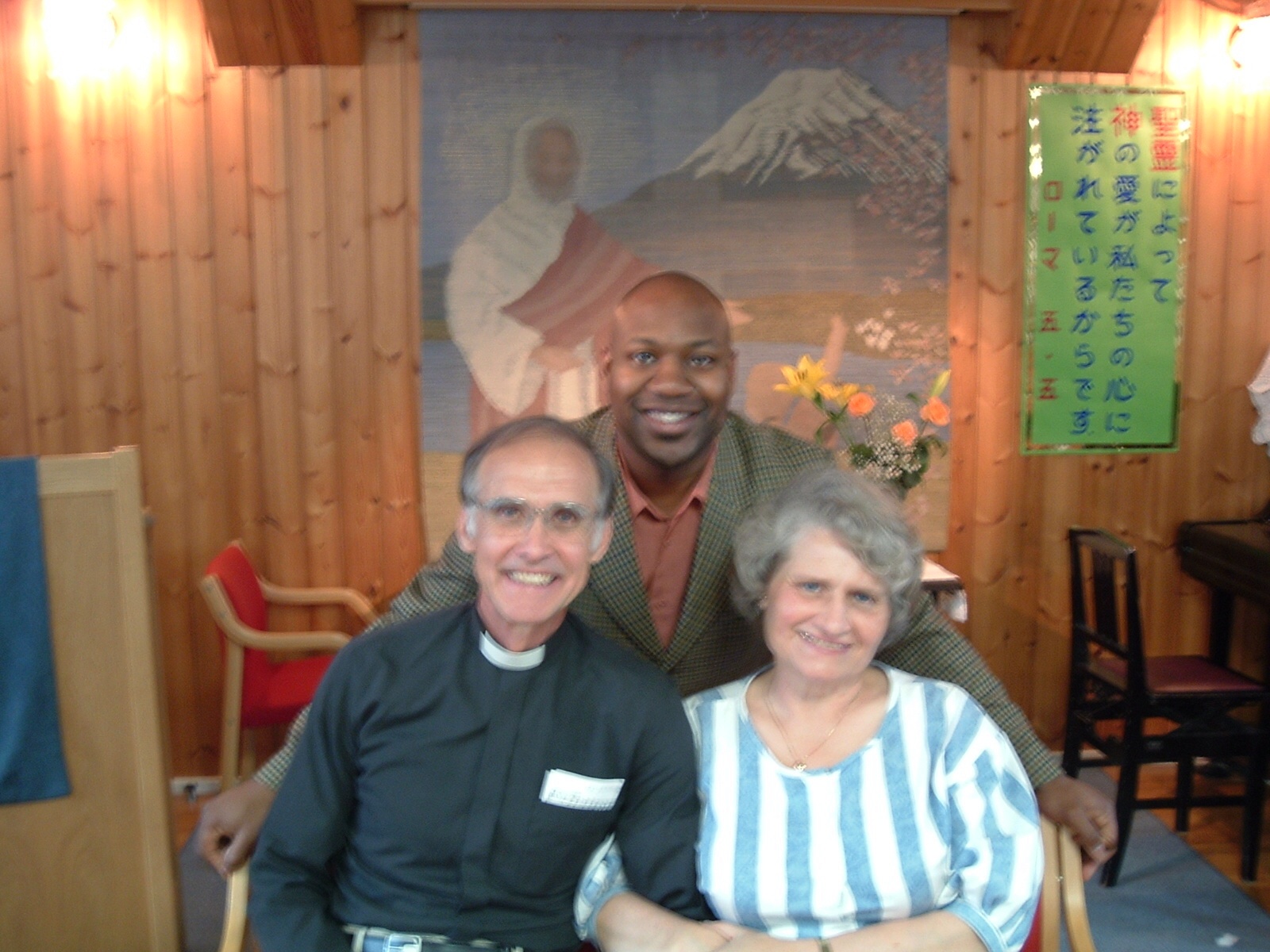
Me and the Dellmings

You Who Would Be Great

It was one of the best things Pastor Bo gave me, a lesson on humility. No matter how high God takes you, Michael, be like a child. This from a man who would only see how much more was left for him to do for Christ.

Jesus, responding to the disciple’s griping, answered the question of greatness in the kingdom by calling a child over and declaring, “Truly I tell you, unless you change and become like little children, you will never enter the kingdom of heaven…whoever takes the lowly position of this child is the greatest in the kingdom” (Matt. 18:3-4).

In other words, be teachable. Don’t get caught up in your own hype. We are nothing; God is everything. Divest yourself of empty ambition and seek only to serve him and as fully as you can. Learn that the highest place in God will always be at the feet of Jesus.

 Pastor Dellming passed away in October 2016. His wife Kerstin survivies. 

New Testament Trivia!

CC BY-NC-SA, LEOL30, Flickr
CC BY-NC-SA, LEOL30 Flickr

Let’s see how well you fair. Share your comments.

  • Excitement over what miracle effectually sealed Jesus’s fate? (John 11:45-54)
  • To whom did Paul likely write a prior epistle that is now lost?
  • Who was the prophet that accompanied Paul on his second missionary journey? (Acts 15:32)
  • A portion of what group of religious leaders converted as the gospel spread in Judea? (Acts 6:7)
  • What church in the province of Asia received a now lost letter that was to be read by the Colossians and vice versa? (Colossians 4:16)
  • What event marked the first great persecution against Christians in Judea? (Acts 8:1-3; 11:19)
  • Who was the cause of sharp disagreement between Paul and Barnabas and was Barnabas’s cousin? (Acts 15:36-40; Col. 4:10)
  • What was the requirement the 11 apostles imposed in selecting Judas’s replacement? (Acts 1:21-22)
  • Who was the first apostle martyred? (Acts 12:1-2)
  • What four languages might Jesus have spoken?


ANSWERS

 the raising of Lazarus; the Corinthians (1 Cor. 5:9, 11; 2 Cor. 7:8); Silas; the priests; the church at Laodicea; the martyrdom of Stephen; Mark, writer of the Gospel; the person must have been an adherent of Jesus’s ministry from his baptism at Jordan to his ascension; James the Greater, brother of John; Hebrew, Aramaic, Greek (most likely), and Latin (possibly)