The Deceit of Riches

CC BY, MS Images
CC BY, MS Images

Have we not all at some point envied wealthy persons, their lives or possessions? I know I have. Everyone desires a comfortable life, and the more comfort always seems the better.

Now it doesn’t take a change in status to be comfortable. People who, in the eyes of the government, live at the poverty level can and do live comfortably because how one manages their income matters greatly. Unfortunately, poverty stigmatizes people as lacking restraint, but that’s not necessarily true.

The bottom line about true wealth and poverty has nothing to do with dollars and cents. Instead, it has everything to do with inner happiness.

Dangerous Idealism

Humans have a tendency to romanticize wealth. And let’s be clear: there is nothing wrong with being rich. The scripture nowhere condemns it. Everyone has a responsibility to work and wealth is a possibility for all.

I must be careful here lest I paint a stereotype about wealthy people; and I do not wish to spurn them or their wealth. But I do intend to express how often erroneous is our conjecture about riches and rich people.

If only at the nether reaches of our minds, we sometimes think people with lots of money…

  • Need nothing
  • Experience no hardship
  • Possess the power to do as they please
  • Deserve recognition and honor
  • Know more than less wealthy individuals
  • Are people of integrity

That is how television often portrays the wealthy—right before you see that they deal with the same life issues common folk deal with. And you notice how their wealth and power influences their choices and decisions, not unlike how poverty affects the choices and decisions of others. The test of struggle is to survive its dearth; however, the test of prosperity is to survive its flood.

Asaph’s Portrait

America has increasingly become a society of people chasing after riches. But many people are only discovering disappointment when they find them. It’s not because they don’t enjoy the many ways money makes their lives easier; instead, it’s because they realize how it makes their lives harder.

I can never escape Asaph on this topic. He paints a lucid picture of impious wealthy people who do not realize the toll they’ve allowed their wealth to take on their hearts.

“For they seem to live carefree lives, free of suffering; their bodies are strong and healthy.  They don’t know trouble as we do; they are not plagued with problems as the rest of us are.  They’ve got pearls of pride strung around their necks; they clothe their bodies with violence. They have so much more than enough. Their eyes bulge because they are so fat with possessions. They have more than their hearts could have ever imagined. There is nothing sacred, and no one is safe. Vicious sarcasm drips from their lips; they bully and threaten to crush their enemies. They even mock God as if He were not above; their arrogant tongues boast throughout the earth; they feel invincible” (Psalm 73:4-9, VOICE).

Asaph describes people who having trusted their wealth don’t notice the side effects of doing so. They never realized how their privilege allowed all their desires and inhibitions to surface and take control of their lives. (Again, I do not generalize.)

What we often don’t see with these folk are the effects of vice on their hearts. Plastered smiles and a pompous glow only go so far before the pain of inner distress and sadness causes you to buckle.

You may have heard the stories of those who evangelize or make prayer visits to astute communities; they sound much like the stories told of those on the other side of the tracks, sometimes worse. We don’t readily assume that wealthy people are hungry, violently abused, bound in addiction, drowning in debt, or suicidal, yet many live this way behind closed doors.

Getting Free

Sometimes it’s real tough for these people to find freedom because they can get buried beneath the trappings of their lifestyle. Issues of pride, image, reputation, dignity, etc., keep their problems shut out of view and keep them away from help, which only allows trouble and vice to run rampant.

Folk with lesser wealth often have less of their life invested in their reputation to allow such a thing to threaten their well-being.

Perhaps too some wealthy people don’t know how to call for help. They’ve always been in a position of control and security, the ones making decisions and helping everyone else never expecting that they would ever need rescuing. That role reversal must surely be difficult.

All Things are Possible

After the rich young ruler walked away from Jesus, the Lord twice exclaims to the disciples how difficult it is for the wealthy to enter the kingdom of God. It doesn’t mean that they won’t or that it’s impossible; if you will, this was Jesus telling them, “I’m just saying…”

He’s really pointing to those weeds he speaks of in his parable of the sower. They represent all the fineries, gaieties, and pleasures of life but leave one bereft of spiritual wealth, stymied in his spiritual efforts and bankrupt in the life to come.

But a powerful truth he speaks next—“With men it is impossible, but not with God; for with God all things are possible” (Mark 10:27). For all of us the leap from folly to faith is impossible without God. But hopefully you didn’t miss what was so plain to Jesus and remarkable that we don’t see: just how burdensome wealth can be on the soul, the one place that never factors into our dreams of being rich.

Yet God, he says, can give even the wealthy the grace to make the leap into kingdom life.

I trust that you pray for the lost. The next time you do, say a prayer for those who are wealthy. Pray that they be good managers, even stewards, of their wealth. Pray that God would rebuke the Evil One who desires to drag their souls to hell. Pray that they will know the rich love of Jesus, that God would dispel all religious exoticism and foolish revelry so they would know Truth.

God loves the wealthy.

Other reads: 2014 Gates Annual Letter; Why Do the Wicked Prosper and The Perils of Covetousness
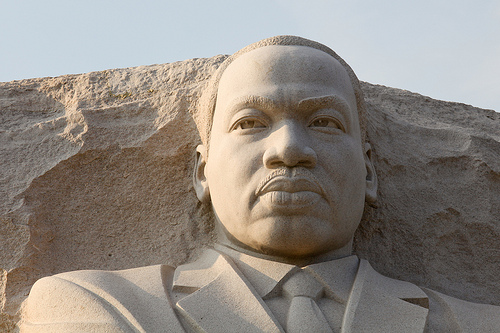
The Gumption to Take a Stand

CC BY-NC, NewHour, Flickr
CC BY-NC, NewsHour, Flickr

“Change does not roll in on the wheels of inevitability, but comes through continuous struggle. And so we must straighten our backs and work for our freedom. A man can’t ride you unless your back is bent.” 

Martin Luther King, Jr, April 3, 1968

One thing I’ve learned about myself is that I will speak up when it counts. I am usually not looking to be the leader or to make waves; it just happens. I think it stems from my belief that all authority can be questioned.

I hated when friends would grumble about things but reject options and solutions I offered them or chicken out when I took a stand.

Likewise, it always unnerved me when friends from other nations ridiculed America, expressing their own patriotism, but opted to remain in and enjoy the fruit of America rather than to return and make a difference in their homelands. That may sting but there is truth at the heart of it.

Women in Afghanistan

Change and reform are necessary in our world and relationships; and it’s due to the condition of the human heart. We would like to believe in the goodness of everyone, but too often people betray their own capability for doing right.

A problem arises when we think that changing people is something easy to do, like setting a broken bone or leveling and rebuilding a part of the city. It’s never that simple. Humans are intricately caught up in the weave of good and evil.

Unfortunately, our penchant leans toward immorality.

I was watching television and heard something that really surprised me. A gentleman explained that not long ago women in Afghanistan bore far more rights than they exercise today and were more educated, being doctors, professors, and scientists.

Afghanistan? I thought.

I performed but a small research and discovered a generous women’s rights history in Afghanistan during the 19th and 20th centuries. It all screeched to a halt, however, in the late 1970s and 80s with the influx of communism and war—and the rise of the Taliban, which ultimately ended the forward progress and returned Afghan society back to the strong patriarchalism it once knew.

Although there has been some improvement in the condition of women and children over the last 15 years, post-Taliban Afghanistan, its women and children, remains badly disenfranchised and dehumanized.

Do Something!

Listen, change, like the change needed in Afghanistan, costs something. And it costs someone something. It’s necessarily personal—no way around it. I can only loathe those who expect to sit back and let others bear the consequences for their ease without understanding the price for that ease.

Change is never pleasant; it is uncomfortable at the least. And those who never see the problem and see it as their problem usually do when it finally spins their direction tearing things to shreds. Dr. Martin Luther King, Jr, said, “Our lives begin to end the day we become silent about things that matter.”

For me to have discovered the details about Afghan women and reacted with a self-centered I’m-glad-that’s-not-me attitude, in my opinion, would be to approach grievous immorality in my heart and become part of the problem. It is to participate in the evil, if only by nonchalance.

Hopefully, something in our personal and social constitution—and certainly in our Christian faith—teaches us that our individual well-being finds haven and security in the well-being of the cluster. It’s a collectivist approach that can teach us much. (Psst!—Jesus lived in that type of society.) It would do us well to grasp that we all become better as we hurt, fight, heal, and finally rise together.

Two excellent links on Afghan women and education: 

What We Learn in God’s Holding Patterns

CC BY-NC, Fly For Fun, Flickr

A flight holding pattern is a delay tactic airports use when planes cannot land for different reasons, like congestion or bad weather. If you’ve flown enough, you have probably experienced one of these. In fact, you may have looked out your window and saw the airport but wondered why on earth you were flying around it in circles.

Depending on the type of delay and number of incoming aircraft, planes can be stacked in holding until air traffic controllers can land them one-by-one, starting with the lowest plane.

God’s way with us is like holding sometimes, can you agree?

Learning Contentment

Who doesn’t love that great Pauline verse—“I can do all things through him who strengthens me” (Ph. 4:13). But I’ve found that many of us don’t understand its context. It is definitely deeper than the Christian self-help it has become in recent times. Paul refers to his ability through Christ to keep at an even keel while facing the highs and lows of his life. He expresses how the grace of God offers him contentment.

So let’s back up a little. Paul, a prisoner now and finalizing his letter to the Philippian Christians, thanks them for their generosity to him. Then, he quickly clarifies that he doesn’t bring up the matter for any new need he has…and this is where the important context begins.

“For I have learned to be content in whatever circumstances I am. I know how to get along with humble means, and I also know how to live in prosperity; in any and every circumstance I have learned the secret of being filled and going hungry, both of having abundance and suffering need” (vs. 11b-12, ESV).

Is Contentment Satisfaction?

This is a revealing glimpse at Paul’s life. His words comfort us in our trials today because someone as sage and godly as he is transparent enough to share his own holding patterns in the will of God.

What does Paul mean by content? Surely he desired to be out of that prison. His churches were better served by his presence among them; after all, he’s sending them a letter here. Certainly he preferred a full stomach to a grumbling one and peaceful presentations of the gospel instead of violent protests.

If we’re not careful, we will make Paul say that he was satisfied with his circumstances. But consider yourself: perhaps there was a time when you didn’t have the things you needed. Did that cancel your desire to have more or better, especially if someone depended on you? No, it didn’t.

Think about the plan God has shown you for your life. Maybe you’re in a hard place right now and simply cannot fathom how he will make good on his promise. Although it’s difficult now, God showed you his plan at the start to provide you hope for when the good times turned. He doesn’t mean for you to build a home in the wasteland.

Something on the Inside, Working…

Instead, Paul’s contentment means he was inwardly self-sufficient, not requiring outside support. It means that he was indeed satisfied with the grace of God that propelled him forward in the divine will despite his external circumstances. In fact, it was knowing that wherever he was in life somehow accomplished the will of God for him; and because of that he could do all things through Christ who strengthened him. The scope is pervasive, all-inclusive.

Herein we are offered a deep lesson about what we possess and don’t possess. The highs and lows enter our lives to lend us perspective and never to disturb our rest in God. For whatever may come, we cling to grace, not things.

Let me sum it up this way: Contentment is to not worry about anything you see around you or off in the distance, whether it’s your natural sustenance or the very promises of God. But it is to learn and progress right where you stand. And it is to trust God—who knows exactly where you are in the holding pattern—until he lands you where he wants you next.

More on this topic: The Perils of Covetousness and God, You’re Killing Me!

The Last Days of June

CC BY-NC, aouniat, Flickr

Bladder cancer meant the last year of my grandmother’s life. That’s how it was. The doctor had told us that it wouldn’t be serious. Somehow this was a friendly cancer that would let Grama live to die of something else, like her diabetes maybe, but he was dead-wrong.

The clock had already been ticking. Christmas that year, six months and four days before the end, the eve of which was her birthday, had been unusually joyful. Grama, with all her grandchildren around, laughed until she cried, until it seemed that delight could be her cure, yet we all saw it coming.

When to Say Nothing

I returned home to live from Indiana in early June of 2006; Grama had not long been in a nursing facility in Martinsville, the next town over. She was my father’s mother and the only grandparent I knew well. I planned my visit to see her as soon as I could unload and place my belongings. I hoped the surprise wouldn’t backfire and be mine to loathe because I wasn’t sure what I might find. I could only wish for my granny healthy as possible, recognizable, and glad to see me.

That day I strode down the corridor past open doors and the oddities and odors that claw at passers-by in such sad places of the physically marooned, hoping that Grama’s room was a refuge. I slowed as I approached the doorway, which was open; I didn’t hear visitors inside. I took a deep breath and entered the room confidently.

It was bright and sterile, spotless in fact, and peaceful, with the sun in full glow like a gift for the moment. My grandmother was lying in the far bed next to the window and neatly tucked under a white blanket. She was looking out the door when I entered. “Michael,” she said plainly, the inflection revealing her surprise and bewilderment.

I’m not sure how I reacted, but I went and kissed her on the forehead. Grama looked herself. She turned her face toward the window and cried; I didn’t try to console her. I wondered then and many times since if she wept for seeing me, her eldest grandson come to see about her or because she knew that it might be my last chance.

Bittersweet is hardest to swallow.

In that moment I had no context to understand how she could be feeling, so I respected those deeply profound seconds by waiting. What is it like to face your own death? To know there will be no more living? The future isn’t scary when it means you’re alive and prospering, but the future is perfectly inconceivable when it means you’re dead. I know what my Christian faith explains about the afterlife, yet a human creature, indeed any living thing, designed to grow and reproduce abhors the thought of death.

Grama knew that she was dying because she was already discussing her final wishes. I recall the few times I heard her exclaim “I thought I was gon’ die!” when in the past she had fought off a bad bug or complications. The comment would always make me hide my laughter and still brings a smile to my face for its superstitious absurdity. But seeing Grama cry, however, was in its own way a door of finality.

Tomorrow?

Grama always assumed my return the next day. She wanted to see her family daily simply because she was there. I suppose that I would want my folks near me too for less grievous reasons. But I didn’t always make it back to Grama daily despite the easy thirty-minute drive. Sometimes it was no reason more than the monotony of the place: watching her sleep, no TV, window watching, book boredom, the nosy roommate.

We all lapsed a time or two, for different reasons, and not because we didn’t care but for the cares that consumed our time. Where there wasn’t work and business matters to tend, there was indifference that often trades substantial things for indulgence and always counts on tomorrow. I’m not sure that brand of tomorrow exists though whether we’re living or dying.

I cringed at the fact that when I could have and maybe should have been with Grama, I was busy doing nothing. Sometimes I was lying around watching TV while she was lying down waiting to die. The self-interest disgusted me. Yet I would think this way of Grama, too. Didn’t she realize that we couldn’t possibly be there all the time? Did her dying lend her more right to need? I hated myself for thinking this way. I’ve learned that human nature is a demanding, self-centered circus of a thing—even when the animals are calling it quits.

“Mirror, Mirror…”

Grama forgave us for missing days but not for leaving her there. She wanted to go home and was belligerent about it. The first day I saw her she wanted me to take her home. I could be Hercules with her hoisted in my arms plucking off every resistance until I laid her down in her own bed. It was that mythical at least.

Conversation became awkward at times. “I can bring you lunch if you’d like,” I would say. “What do you want?” The reply would come like a blow and deadpanned: “I wanna GO HOME.” The most I accomplished for her was to get a new chair in the room to make her more comfortable and allow us to sun on the patio.

There soon came a day when I entered the room and noticed signs of the inevitable peering back at me. Grama was gaunt. The volume in her face was gone, completely, and she appeared skeletal. Her skin had become ashen. Her mind and morale remained but her body had been taken hostage. This alarmed me because it happened quickly, and I’m sure she had no idea of it.

One day she requested a mirror from the nurse to look herself over. I couldn’t know how long it may have been since she had seen herself. The act of something so simple seemed so primitive and animal-like to me watching her do it. Research shows us certain animals, like chimpanzees and elephants, querying themselves this way to demonstrate self-perception. Did Grama recognize the person staring back at her? I expected an exclamatory remark but she said nothing.

The Final Night

A few days from that time we got the call to come because our friend—the cancer—had turned foe and would wait no longer. I walked in the room this time and Grama was but a shell now and clearly in her final hours. She was lying on her right side into the bed railing, her eyes partly open, her mouth twisted.

Death is such an indignity.

Her roommate was a Christian woman and an unfortunate soul for the trials she had endured to this point. She had come to the facility with her husband roommate, in that very room, but he had died beside her; she was given a new roommate who also died there; now it was my grandmother’s turn. The staff moved the lady to another room to give us privacy, but I considered it an act of compassion for her own sanity.

Yet the roommate didn’t leave without first detailing my grandmother’s final night. She spoke as frankly as possible. “That woman drove me crazy!” The way she bellowed the word—CRAAZI!—with a distinctly Southern drawl, I found more embarrassing than insensitive, especially standing there with my mother and the pastor.

She said my grandmother had kept the nurses running all night and screamed for the pain in her body—“callin’ on Jesus and askin’ God to kill ’er.” Her words were chilling. That kind of pain must be hell itself. “But she was a good lady,” she affirmed, noticeably in past tense. She repeated herself then quickened, lifting her hand to God. From her account I figured that my grandmother was lucid into the day until her condition turned sometime that afternoon.

The Shadow of Death

Family and many from the church soon packed the room, presences casting their farewells. I was surprised by the show of people and most remained into the early evening. The night came and with it my decision not to stay to the end, whenever it arrived, but I was sure there was no tomorrow.

It was now the very end of June, less than a month since I had first burst in and kissed Grama’s forehead. This time, my last moment with Grama, I walked to her bedside, took her right hand, and bowed in silent prayer to the God who had numbed her soul against a ravaged body. I offered thanks for all the care and fun and meals and counsel she gave me, along with a request that I might pray and trust as she had, until my very end.

I was told by a family friend of a peculiar moment that happened after I had left when she recited Psalm 23 to my grandmother, which was also Grama’s favorite reading of the Bible. Science suggests that hearing is the last of the senses prior to death, presumably the reason—and a good one—why people venture to talk to the unconscious. Our friend leaned down into Grama’s ear and recited the passage; at the line “Yea, though I walk through the valley of the shadow of death,” my grandmother made an audible drone, the only sound any of us heard out of her that day and forever.

The End

Joy and Cheryl, two of my sisters, were determined to keep vigil and not leave Grama to die alone. They were the saddest of anyone having been the closest to Grama of the five siblings. They had taken the most of her care and heed through the years, especially Cheryl who had now managed her affairs for a long time.

It was no surprise to me that they waited. I was sad in theory. I loved my grandmother and my heart had suffered some whenever I sat with her. Still, I saw death as a natural part of life and it no longer rattled me as it did when I was half my age. And I think that’s how you get through it, by remembering that death is personal for us all. Grama had now lived to be eighty-nine years old, well past life expectancy, but one expects old people to die. Young deaths and tragic ones are tougher, for their abruptness and intrusion, but the elderly just fade away. I wondered if I was supposed to feel sadder.

Grama passed at 3:30 in the morning. It was June 29, an otherwise happy day on the family calendar because it is Joy’s birthdate.

Joy reported that Grama sat up suddenly and looked around. My sister jumped out of her seat calling aloud to Grama trying to arrest her attention. Whether Grama saw her cannot be known. When I heard this I thought of the Resurrection account of the dead supposedly returning to the streets of Jerusalem at their pass into the heavens; and out of a cancer-eaten body my grandmother’s spirit lifted, too.

She very well might have caught a glimpse of the room and my sisters, but I imagine that the vista into which she rushed was rapturous. No sooner than she had sat up, she lay down again, and like that she was gone.

My Two Cents on Generosity

CC BY, emilianohorcada, Flickr

Thought: If I had millions of dollars, I’d be an incredibly generous person.

I’m sure you’ve heard this kind of talk, especially when the jackpot swells. Wealth does indeed allow people to be generous and helpful. My problem with this rationale, however, is that we should think more money makes us more generous persons.

Now I don’t doubt that there are many who have respected their fortune by carefully weighing the responsibility of managing it—and have become more generous due to a new appreciation for wealth’s power. And there are those who have purposefully and creatively used earlier hardship as the impetus to empower others less fortunate.

These kinds of people underscore a process of building virtue and have understood that to be reckless with wealth is to disregard the noble prospects it is capable of producing.

But to assume that abundance directly translates into abundant virtue…well Jesus would quickly disagree with us.

Asian Hospitality

Let me tell you about a wonderful encounter of hospitality I had.

I was a teacher in Japan and decided to spend my first vacation in Tokyo. My American co-worker (and college mate) grew up there and was going to visit family; he asked me to come along. Lodging for me was arranged with a Christian family who gladly agreed to house me.

I was shown incredible hospitality. The entire upstairs loft belonged to me, and my host pre-stocked the refrigerator there with every imaginable treat. My clothes were washed, ironed, folded, and delivered daily. Meals were prompt and the matron’s sister baked and sent over exquisite breads for us. I was insisted upon to use the home phone to call and chat with my family back in the U.S. And despite the language barrier, we enjoyed the presence of Christ together in devotions after meals.

My friend had decided to join me the second day. Those he visited were elderly, so he opted to lodge with us and use his fluency to help us all communicate. When it came time for our departure, the patriarch handed each of us an envelope that, to our astonishment, contained almost $200 to pay for our train home—and a trip to visit them again.

Cultivated Hearts

This kind of hospitality, which I bumped into regularly as a gaijin (foreigner), is extreme by American standards. Obviously, it’s largely rooted in Japanese and Southeast Asian culture, but that lends to what I attempt to convey here. (And I should again emphasize and beg you to consider, to my point, the authentic faith I witnessed in this home.)

To think that wealth, newfound or otherwise, makes us more generous individuals really is to deceive ourselves. If you missed the point the first time: the heart must be cultivated this way.

I hope you go out of your way to accommodate others, really. But the level of generosity I described—let’s face it—isn’t quite American, culturally, for reasons I cannot explain now. When you go on vacation, is it imperative that you return bearing gifts for co-workers to show you were thinking about them? No, you hightail it outta the office just to get away from them jokers!

Gifts of the Heart

Let me be concise. I’m not convinced by wealth-induced “sudden generosity” because abundance has very little to do with virtue. Folk who have nothing but are truly generous people will share the little they have with others in need without a second thought. Did we clearly hear Jesus’s proposition—“Life does not consist in an abundance of possessions” (Luke 12:15). Real generosity doesn’t need wealth.

After observing the rich give their offerings and a widow place two copper coins in the temple treasury, Jesus turns to the disciples and says, “They all (the rich) gave out of their wealth,” meaning their gifts were inconsequential to what they possessed and were easy to offer. For all their abundance and the pride they derived from it, they possessed little spiritual wealth that begged of sacrifice and unadulterated devotion.

But this widow “out of her poverty, put in everything she had”—two paltry coins—and so confirms my point here.

More posts on this topic: The Perils of Covetousness, Living with Simplicity, and Why Do the Wicked Prosper? 

The Day I Got Checkmated

CC BY-NC-ND, Ahd Photography, Flickr

On the day I was betrayed, a wing mate leaving the cafeteria reported to me that he had just overheard some guys speak my full name and boast how badly I was going to “get it” that evening. I immediately went on high alert. I couldn’t be someone’s target, could I? But I also knew that only one person was probably behind it: John Zimmerman.

I could hardly concentrate in classes that day. Stressed by my academic and dorm responsibilities, I also had to represent the Communications department that evening on the ministry broadcast. This new threat, however, terrorized me; it was beyond my control.

I went to dinner promptly at 4:30, as usual, but I returned to my dorm and hid out in my friend’s rooms without indicating my real reason for visiting them. When it came time to ready myself for the taping at 8 o’clock, I shot back to my room, darted in and out of the shower, and headed straight for the studio.

My mind was fully occupied while on-set, but when it was over and I crossed the large parking lot back onto campus, I felt as if I was walking into a treacherous hinterland. This was my Gethsemane. Was I being tracked? I looked all around me. What was this and how did it start? Maybe the guy didn’t hear correctly and I would pass into the morning unscathed…maybe.

Not Tonight, Please

I had about thirty minutes until a counsel session with a new friend. I was happy to finally get the chance to meet and talk with him. He had shared very kind words with me about a brief oration I delivered months earlier and asked to sit down with me. We hadn’t got the chance because our schedules—my chaplain duties and his acting and writing—never permitted.

I needed to be near my room because I couldn’t afford him showing up and me not being there. Yet I refused to be holed up in the room for fear of being accosted. So I sat in the alcove just outside my room instead. I would be able to detect anything suspicious and escape. The hallway was octagonal with a few exits into the stairwell and an open-ended bathroom; and if those options failed, I could dart into my wing mate’s rooms. Solano, my trusted friend and fellow chaplain, stopped by for a few minutes, a comfort to me, then left. I mentioned nothing to him.

John—this night the name of both my new friend and the suspected enemy—arrived and we were happy to see each other, although I was exhausted in every way by now. It was 9:30. I welcomed him in and made sure to lock the door behind me. No sooner than we sat down to talk, the telephone rang. Not another distraction to this meeting, I thought. I debated answering it, but it was just a phone call; so I did: it was…John.

Not Without a Fight

I knew in my heart that the night had just begun. Zim’s voice was too cheerful and suspect and that caused my mind to race. Something felt evil. He made a strange request: look at the door. What? Nothing unordinary…no markings on the large mirror. But as I watched, the doorknob turned. I threw the phone down and lunged my body against the door, but his dorm group exploded into the room.

All these guys—Vasquez, Dingman, Elijah, King, and Michael—were my friends, but tonight they were loyalists. This was war. I fought as I had never done before, amazing myself as I beat back two at a time, wildly slinging some away and knocking others to the ground. At one point I thought I might escape, but Michael, a brawny guy—my roommate for three weeks at the start of the school year—and Zim’s best bud and roomie sent just for the purpose of matching me, clamped down on my legs and immobilized me.

I yelled to John the Good, still seated and calm but probably wondering what the hell was happening, to call Solano but this was futile: they took the phone. I told him to go a floor up and find him, but they threatened him if he moved. None of my wing mates were around, for a change; I was deserted.

Bound and gagged on my own floor, I laid there still in my eveningwear. Then, like a TV moment, Zim, the ringleader, entered the room. It was indeed John, my friend and co-laborer. He entered with his trademark smile laughing with glee at his triumph. I could have expected a signal kiss on the cheek had his men not already captured me.

He took control of the scene as he had done from afar up to this point. His guys stationed themselves at lookout points in the hallway and others secured the elevator. Once it was staged—hallway clear and elevator door open—I was carefully hoisted by my shoulders and roped hands and legs, facedown, and swiftly kidnapped from my room—stolen again from my meeting with the other John who was simply left there alone. I was taken to Zim’s room, my holding cell.

The Mighty Has Fallen!

Once there I was sat in a chair. John approached and slapped me, not with his hand but an insult. As if the camera makeup I wore already wasn’t enough, he used black and red lipstick to mark my face with mockeries and ransom slurs. A paper crown was placed on my head. The group took great delight in all of this—and photos.

While I sat there unable to free myself, I was appalled at the extent of their operation. They added the photos of me, the great Spiritual Life Dorm Director of Upper Michael now branded, helpless, and humbled, to a webpage they had created solely for my capture. The site included a scavenger hunt that would lead my dorm group to where I would be imprisoned for the night—after they had crisscrossed the campus.

Following this brief interlude, I was whisked away yet again to what was my final confinement: the dorm director’s room. Yes, he was part of this scheme, too; it is how Zim had gotten a key to my room. I realized I had been nowhere safe.

Some of my scoundrel captors were already present when I arrived, including Tim, the mastermind. They threw a festive party with cookies, chips, soda, and video games; it was a den of hell and I was the entrée. They told me the entire story, bursting to do so. Tim, my best bud in this group and the one I always playfully taunted, devised it all. A few of my guys and I had ganged up on him in the chapel weeks earlier and so sealed my fate.

The rogues looked into my face for some sign of equal enjoyment. I chose to play the part though, unwilling to add what (tired) enjoyment I was having to their spirited triumph. I spoke only when I addressed them individually to heap as much guilt as I could upon them. Some revealed after the ordeal that they feared they had truly offended me, although they hadn’t. I count that a small victory for me.

The Wait

When the partying ceased, I was taken into the adjacent office and plunked down in an old upholstered chair and secured. Here was the end of the road. Had I waited a little longer, I could have worked my way out of the strap-down, but I was detected and painfully fastened. A call was made to tip off my dorm group—and with that the crew made their apologies and goodbyes and jetted.

It was about midnight now. The earthquake was over and the darkness settled in. My only fear was being left there alone until daybreak. The room was pitch black, except for the sliver of light that entered from beneath the door.

After an indiscriminate amount of time, I heard voices of those I recognized; they were at the elevators and my name was being spoken. Soon the doors opened and closed more actively and each time with more people racing through them until I became hopeful and proud. I detected there was an army of Upper Michael men searching for me, yet racing past me over and over again as they scavenged for me.

One Peek Away

It was near three o’clock when I was found. Everyone had so many questions, but it was all more than I could answer or even wanted to at this point. I was drained, humiliated, and frustrated; and I had a test in the morning, yet I ached for revenge.

I went to my room to decide how I might handle the situation at the moment. I needed to look for Zim right then, but I didn’t want to stir up too much trouble. There were about twenty guys ready for a fight—a real fight; however, they were a battalion that couldn’t discern the humor in it all, which I understood.

I led everyone down to Zim’s room and had them all wait in the stairwell, directly opposite his door. The lights were on; a few of my guys and I knocked at the door. Michael the Brute, awake and probably on guard, answered. If I had possessed a sword, I would have felled him on the spot, but I could only barge my way into the room and ask for John.

He was clearly absent; I was sure he stayed off campus for the night. I wanted to send guys to each of the perpetrator’s rooms and take them by force, but any unorchestrated and raucous event at that hour could have plunged the entire dorm into a riot and drawn in school officials. I drew down my guard instead and left.

What I didn’t know until later was that John was standing behind a wall I chose not to inspect—the only (self-made) partition in the room. Also, what I couldn’t have known was that he had garnered to himself the allegiance of all my fellow senior chaplains and their dorm groups. I had been vanquished, except everyone now feared my retaliation.

(By the way, John the Good and I finally got that meeting…two years later. We shared an entire year as neighbors, our private rooms facing one another.)

The God We Cannot Hear

CC BY-NC, davidgsteadman, Flickr

I drew comparison between a parable of Jesus and an idea being debated in a group discussion. A person quickly replied, “You can easily use a scripture to justify your own point.” It was the last statement of the session before we all dispersed; however, I left a little irritated.

The comment offended me for a few reasons. First, it came from a person who knows me very well, my love of the scriptures and diligence with them. So it peeved me that he could think that I should be guilty of sloppy study and a sleazy hermeneutic. His comment was a slap in the face that charged, “You’re like the rest of ‘em, twisting God’s words to prove your own point.”

Second, I recognized how that attitude renders Holy Scripture an abstruse, even esoteric, text irrelevant to 21st century life and modern thought. For either we believe as Solomon said—“What has been will be again, what has been done will be done again; there is nothing new under the sun”—and accept that moral and ethical values have been fairly consistent throughout history, making the wisdom of the Bible very much relevant for us today; or we deem life now and ourselves to be exceptional and devalue the Bible and all historical wisdom since they cannot make sense of our experience.

In that case, my only advice to my friend would be, “Okay, just make sure you never use the Bible or some ancient proverb to make a point”—or to live by. We cannot have it both ways, or feel that God’s words comport with any measure of moral relativism.

The truly frightening thing is the possibility that some of us have made the scriptures to say only what we’ve cared to hear. Yet in so doing, we would have merely elucidated falsehoods, which is something Jesus tackles in his Sermon on the Mount.

“You have heard it said”—because oral tradition, reinterpretation, and commentary had altered and appended God’s own words to claim something he had not said—“but I say unto you…” Jesus’s point stands: don’t misconstrue God’s sentiments. And don’t use him to push your own program but chafe when the Word finally judges you.

The real issue here, in the remark made to me, is certainly not my agenda with scripture, but rather the glaring admission of a poor spiritual foundation and lack of deep study.

Friends, we are not charmers or peddlers of a religious snake oil. We haven’t died to sin and reckoned ourselves ready to die for Christ’s sake for a false hope. No, God’s words are true and powerful, very relevant to life, and will forever stand.

“I Love That Line!” by Guest Writer Nate Smith

CC BY-NC, Israel Defense Forces, Flickr Israeli paratroopers on Mt. Hermon enjoying the season's first snowfall
CC BY-NC, Israel Defense Forces, Flickr
Israeli paratroopers on Mt. Hermon enjoying the season’s first snowfall

This is the fourth and final post in the “I Love That Line!” series that features writers’ reflections on their favorite Christmas carols. Nate Smith, writer of Breaking the Silence, reflects on two stanzas from “Winter Snow.”

It is hard for me to imagine a non-hectic Christmas. Just the mention of the word used to leave a sour taste in my mouth having worked retail on-and-off for ten years and then in restaurants. People swiping cheap gifts off metal shelves to satisfy their family’s greed—(It’s a watch.)—and others: “I cannot believe you’re working on Christmas!” and my unspoken reply: It’s because you’re shopping, you idiot!

It’s the busyness of the season that caused me to hate Christmas. There was always another party to attend, another person to help, another gift to buy that dragged my savings account back to zero. Each act didn’t feel like giving either; instead, it felt more like an obligation to appease those high on the Christmas spirit.

Quiet, Soft, and Slow

The idea of slowing down during Christmas is not usually signaled by numerous texts and e-mails inquiring, “What’s your new mailing address?” So the arrival of a greeting card reminded me not only of those who love me, but also the fact that my address has changed every year for the past seven years.

It was me with the vagabond status that was also not slowing down. But how do you slow down when every year you’re readjusting to a new place? My heart was unsettled in many ways. The Christmas rush was always a stark reminder of feeling left way back in the mix. The season’s great anticipation was simply lost in the chaos.

“Winter Snow” captured my heart last year. The verses explain all of the ways Jesus could have come to earth. It could have been like a storm, a fire, a tidal wave, among other ways. Indeed, it would have been so easy to make a big statement in a region overrun with turmoil and war.

“But you came like a winter snow,
Quiet and soft and slow,
Falling from the sky in the night
To the earth below.”

It was so simple. Jesus entered quietly, a whining newborn lying softly in the manger distanced from war. His was a refugee status that proclaimed to the world that somehow the kingdom of God was now here.

Everything about it was gentle and unexpected, nothing rushed. A nine-month pregnancy cannot be rushed but birthed with patience. And like the snow when it falls, it changes everything it touches. It brings silence and silences the crowds, for winter has come.

Thy Kingdom Come

I see in my many address changes an odd approach to how the yearning human heart seeks after God. And it prompts me—vagabond spirit, unsettled nature, and all—to slow down and really notice how the Kingdom comes.

Now escaped from Christmas greed, I can see the beauty of Christ everywhere—in the laughter of those frolicking in the snow; in the warmth between a couple strolling and admiring Christmas lights; in the anticipation of gingerbread cookies almost done.

“Oh, no, your voice wasn’t in a bush burning.
No, your voice wasn’t in a rushing wind.
It was still; it was small; it was hidden.”

Read more by Nate on his blog Breaking the Silence.